
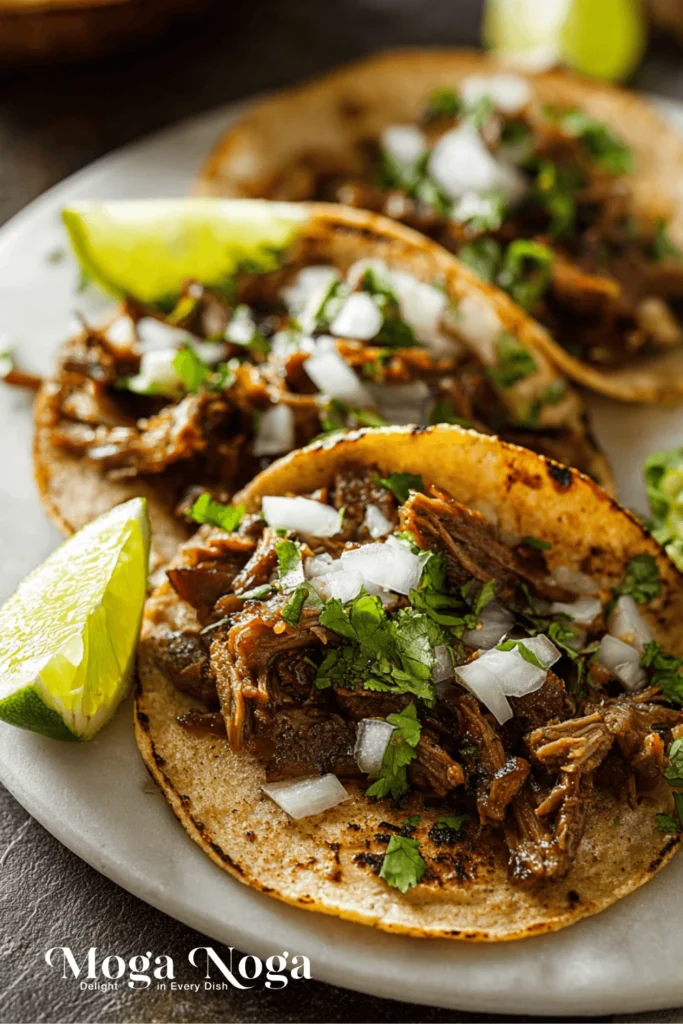
Carnitas has a way of filling the kitchen with the kind of aroma that makes people wander in a little closer.
It promises something rich, savory, and impossibly comforting before the first bite ever lands.
And once that crisp-edged pork meets a warm tortilla, it becomes very hard to think about anything else.
Table of Contents
Why You’ll Love This Recipe
There’s something deeply satisfying about a dish that feels both rustic and irresistible, and carnitas does that with almost no effort once you understand the rhythm of it. It’s slow, generous food with a bold heart, the kind of meal that turns an ordinary dinner into something people remember.
- Big Flavor, Simple Process: Carnitas delivers deeply seasoned, juicy pork with beautifully crisp edges, yet the method is surprisingly approachable. You don’t need fancy techniques to create layers of flavor that taste like they took all day to master.
- Perfect for Feeding People: This is the kind of recipe that makes you look generous without feeling stressed. Carnitas works beautifully for family dinners, casual gatherings, and meal prep because it makes a big batch and somehow tastes even better after the flavors settle in.
- Versatile and Endlessly Craveable: Tuck carnitas into tacos, pile it onto rice bowls, spoon it over nachos, or stuff it into burritos. One pot of this rich, tender meat can become several completely different meals, which makes it as practical as it is tempting.
- That Signature Crispy Finish: The magic of great carnitas is the contrast. You get soft, succulent shredded pork in every bite, then those caramelized, golden bits that bring the whole thing to life. That texture is what makes people go back for seconds before they even admit they’re full.
Once you make carnitas this way, it becomes one of those recipes you return to whenever you want comfort with a little drama.
Detailed Ingredients and Instructions
This is where the real seduction begins, because every ingredient in carnitas has a job to do, and together they build something far richer than the sum of their parts.
Ingredients Breakdown
A handful of familiar ingredients turns into something deeply flavorful when given enough time and care.
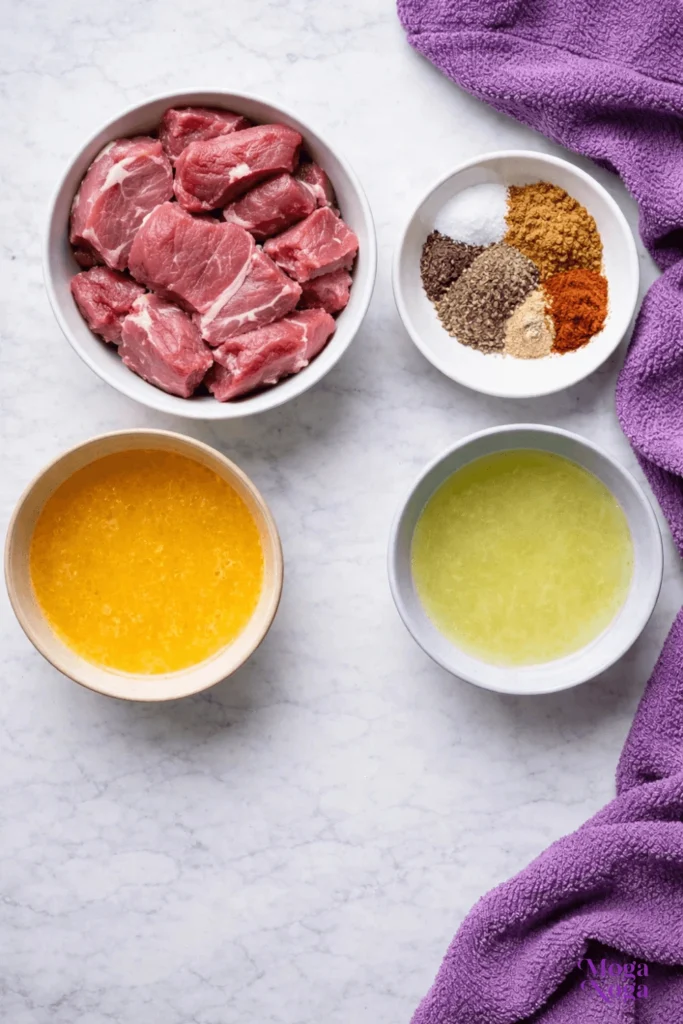
- Pork Shoulder: This is the star of carnitas, and for good reason. Pork shoulder has the fat and connective tissue needed to become meltingly tender during slow cooking while still giving you those irresistible crisp edges at the end.
- Salt: More than a seasoning, salt is what helps the pork taste full and deeply savory all the way through. It wakes up every other ingredient and keeps the final carnitas from feeling flat.
- Black Pepper: A little black pepper adds gentle warmth and balances the richness of the meat without overpowering the classic flavor profile.
- Garlic: Garlic brings depth and a mellow bite that settles beautifully into the cooking liquid. As it softens, it gives the carnitas a warm, rounded backbone.
- Onion: Onion adds sweetness and body to the pot. It helps create a flavorful base that supports the pork and softens the sharper notes from the citrus and spices.
- Orange Juice: This is one of the secret weapons behind memorable carnitas. Orange juice adds brightness, subtle sweetness, and gentle acidity, helping the pork taste vibrant instead of heavy.
- Lime Juice: Lime gives the dish a cleaner, sharper edge. It lifts the richness and helps the final flavor feel balanced and lively.
- Cumin: Earthy and warm, cumin gives carnitas that unmistakable depth many people associate with slow-cooked Mexican-inspired dishes. It adds comfort without stealing the spotlight.
- Oregano: Oregano adds a slightly peppery, herbal note that cuts through the richness of the pork and keeps the flavor from becoming one-note.
- Bay Leaves: Bay leaves quietly infuse the cooking liquid with subtle savory complexity. You may not notice them directly, but you would miss them if they were gone.
- Chicken Broth or Water: A small amount of liquid helps everything cook gently and evenly. It also gathers all the flavors into a concentrated base that clings beautifully to the shredded meat.
Step-by-Step Instructions
The beauty of carnitas is that each step feels simple, but every one of them builds the final texture and flavor that makes the dish unforgettable.
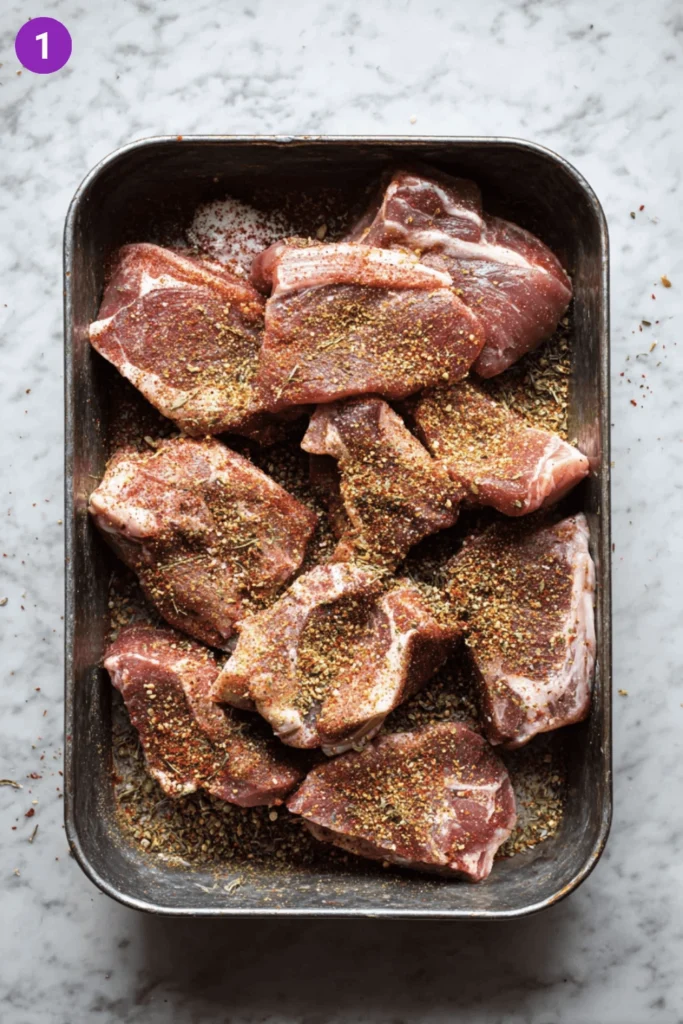
- Season the Pork Well: Cut the pork shoulder into large chunks, then season it generously with salt, black pepper, cumin, and oregano. This matters because seasoning early helps the meat absorb flavor more evenly, giving the finished carnitas a richer taste in every bite instead of just on the surface.
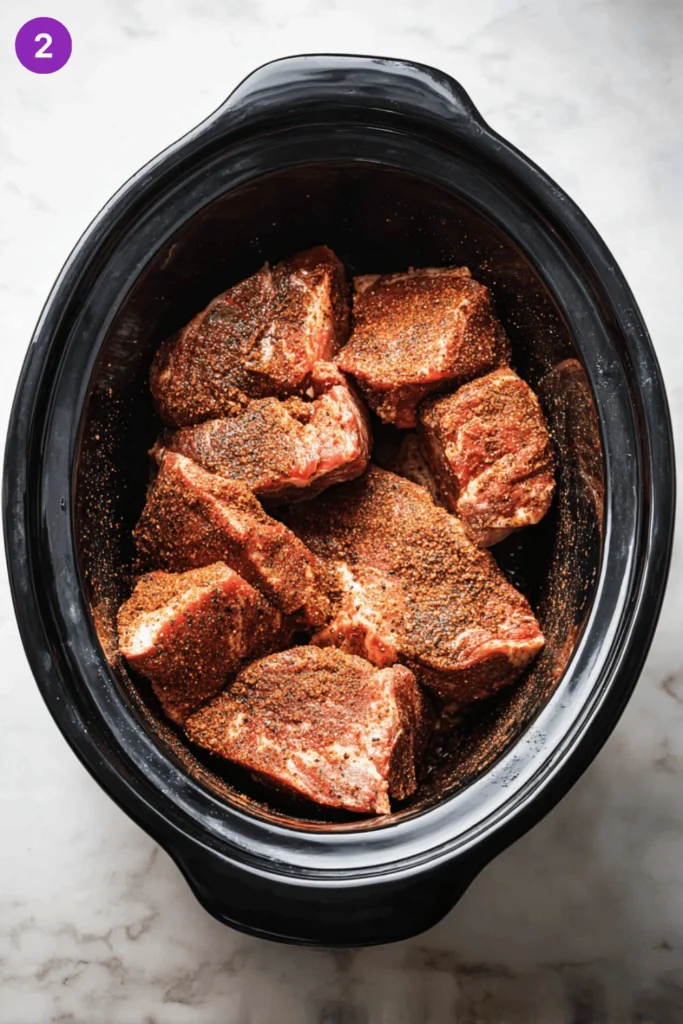
- Build the Cooking Base: Place the pork in a heavy pot or Dutch oven with onion, garlic, orange juice, lime juice, bay leaves, and a splash of broth or water. This step matters because the liquid and aromatics slowly turn into a fragrant braising environment that keeps the meat tender while layering in sweetness, acidity, and depth.
- Cook Low and Slow: Cover and cook the pork gently until it becomes fork-tender and easy to pull apart. This is the step that transforms a tough cut into luscious carnitas, allowing the fat and connective tissue to break down into something silky, rich, and deeply satisfying.
- Shred the Meat: Once the pork is tender, transfer it to a tray or bowl and pull it into bite-size pieces with two forks. This matters because shredded pieces create more surface area, which is exactly what you need for those delicious crispy bits that define great carnitas.
- Reduce the Cooking Liquid: While the pork rests, let the liquid in the pot simmer until it becomes more concentrated and flavorful. This matters because a reduced liquid carries all the savory, citrusy richness of the braise, and tossing it back with the pork keeps the carnitas moist and deeply seasoned instead of dry.
- Crisp the Edges: Heat a skillet or spread the shredded pork on a baking sheet, add a little fat, and cook until the edges turn golden and crisp. This step matters because the contrast between juicy interior meat and caramelized crispy bits is what gives carnitas its signature texture and that impossible-to-resist finish.
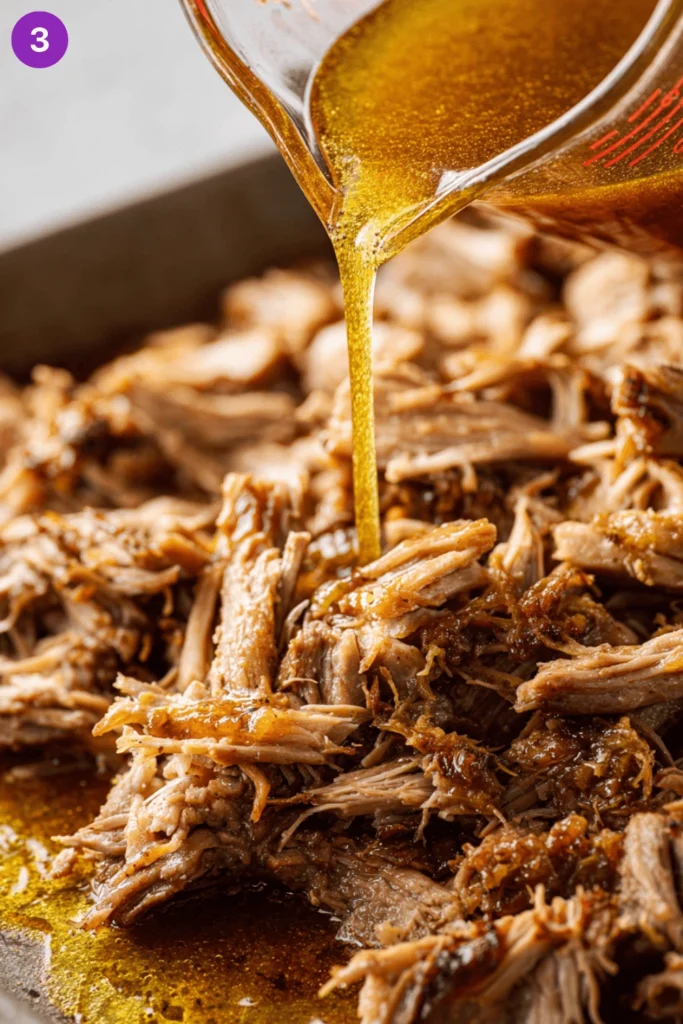
- Toss and Serve: Mix the crisped pork with a little of the reduced cooking liquid and serve hot. This matters because it brings moisture, shine, and concentrated flavor back into the meat while preserving the crisp edges that make carnitas so satisfying.
Tips, Variations, and Storage Options
Carnitas is generous by nature, and that means you have room to play with flavor, adjust it to your mood, and save leftovers without losing what makes it special.
Expert Tips
- Choose Well-Marbled Pork: The best carnitas starts with pork shoulder that has visible fat throughout. That marbling slowly melts as it cooks, giving the meat a richer texture and deeper flavor.
- Don’t Rush the Braise: Low, slow cooking is what gives carnitas its tenderness. If the pork feels firm, it probably needs more time, because properly cooked carnitas should almost collapse when pressed.
- Crisp in Batches: If you overcrowd the pan, the pork steams instead of browns. Working in batches helps each piece develop those flavorful golden edges that make carnitas so memorable.
- Use the Cooking Liquid Wisely: A spoonful of reduced liquid added after crisping can transform the final dish. It keeps the pork glossy and moist while reinforcing every layer of flavor built during cooking.
Delicious Variations
- Spicy Carnitas: Add jalapeño, chipotle, or a pinch of red pepper flakes to the braising liquid for a version with more heat and a deeper smoky edge.
- Citrus-Forward Carnitas: Increase the orange and lime slightly if you want a brighter profile. This version feels especially lively in tacos with fresh herbs and onion.
- Garlic Lover’s Carnitas: Add extra garlic cloves for a richer, more aromatic finish. The longer they cook, the more mellow and luxurious they become.
- Herb-Infused Carnitas: A little thyme or extra oregano can shift the flavor in a subtle but lovely way, especially when you want the pork to feel slightly more rustic.
Storage Options
- Refrigerator Storage: Store cooled carnitas in an airtight container with a bit of the cooking liquid. This helps the meat stay tender and flavorful for several days rather than drying out.
- Freezing Option: Freeze carnitas in sealed containers or freezer bags with some of the reduced braising liquid. That extra moisture protects the meat and helps it reheat beautifully later.
- Best Reheating Method: Reheat carnitas in a skillet or on a sheet pan so the edges can crisp again. Microwaving works in a pinch, but dry heat brings back the texture that makes the dish shine.
Equipment Needed
You do not need a professional kitchen to make carnitas feel extraordinary. A few reliable tools and a little patience are enough to create something that tastes like it came from a place people rave about.
- Dutch Oven or Heavy Pot: This is ideal for slow, even cooking. A heavy pot helps the pork braise gently and keeps the heat consistent, which is key for tender carnitas.
- Sharp Knife: Cutting the pork into large, even chunks helps it cook more consistently. A sharp knife also makes prep faster and much less frustrating.
- Cutting Board: You’ll need enough sturdy space to trim, portion, and shred the meat comfortably. A solid cutting board keeps the process organized and safe.
- Tongs or Large Spoon: These help you move the pork without breaking it apart too early. They are especially useful when transferring the cooked meat for shredding.
- Forks or Meat Shredder Claws: Once the pork is tender, forks make shredding easy and controlled. You can decide exactly how chunky or fine you want the carnitas.
- Large Skillet or Baking Sheet: For the final crisping stage, you need a wide surface that allows the pork to brown rather than steam. This is where the texture shifts from simply good to genuinely craveworthy.
The beauty of carnitas is that the equipment is humble, but the result feels anything but ordinary.
Related Recipes
If carnitas wins you over, there are a few other dishes that belong in the same comforting, flavor-packed world.
- Beef Enchiladas: Rich, cheesy, and deeply comforting, these saucy rolled tortillas bring the same crowd-pleasing dinner appeal with a heartier, more indulgent feel.
- Barbacoa Beef: Slow-cooked and richly seasoned, barbacoa shares the tenderness and bold flavor that make carnitas so hard to forget.
- Cilantro Lime Rice: Bright, fluffy, and fragrant, this makes an ideal base if you want to turn carnitas into hearty rice bowls.
- Sheet Pan Chicken Fajitas: Sizzling, colorful, and effortlessly satisfying, this easy favorite delivers the same bold Tex-Mex flavor with a lighter, oven-roasted twist that fits busy nights beautifully.
- Homemade Pico de Gallo: Fresh tomatoes, onion, cilantro, and lime add brightness and crunch, making every bite of carnitas feel more balanced and alive.
Pairing and Serving Suggestions
Carnitas is one of those dishes that instantly changes the mood of the table. It invites people to build their own plates, reach for seconds, and linger a little longer than they planned. The best pairings bring out its richness while keeping each bite bright, textured, and exciting.
Drink Pairings
- Sparkling Lime Water: The bubbles and citrus cut through the richness of carnitas and refresh the palate between bites.
- Agua Fresca: A light fruit-based drink, especially watermelon or pineapple, adds a sweet and cooling contrast that works beautifully with the savory pork.
- Mexican Lager or Light Beer: A crisp, cold beer pairs naturally with carnitas because it balances the richness without competing with the flavor.
- Citrus Margarita: For a more festive table, a bright margarita echoes the orange and lime notes in the carnitas and makes the whole meal feel a little more indulgent.
Side Pairings
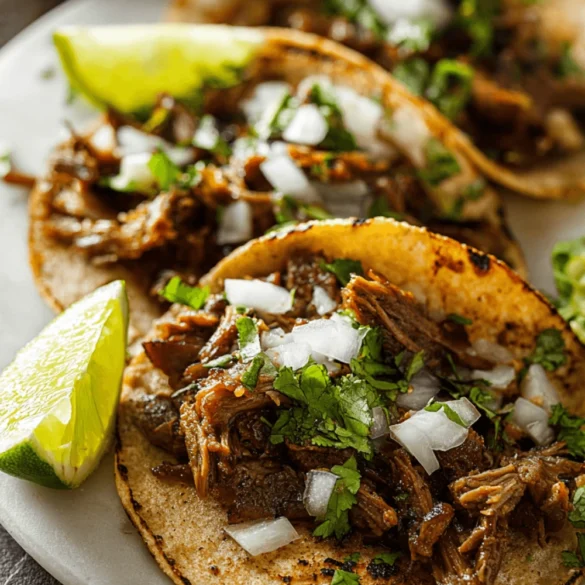
- Warm Corn Tortillas: Soft, warm tortillas are one of the best ways to serve carnitas because they let the pork stay center stage while adding just enough sweetness and chew.
- Black Beans: Their earthy, creamy texture pairs beautifully with the crispy edges of carnitas and helps turn the meal into something more filling.
- Mexican Street Corn: Sweet corn, creamy sauce, cheese, and lime create a bold side that matches the richness of carnitas while adding extra texture and brightness.
- Cabbage Slaw: A crisp slaw with lime or vinegar gives needed crunch and freshness, especially when the pork is especially rich and deeply caramelized.
Presentation Ideas
- Build-Your-Own Taco Board: Arrange carnitas with tortillas, chopped onion, cilantro, salsa, lime wedges, and sliced radishes so everyone can create exactly the bite they want.
- Loaded Carnitas Bowl: Layer rice, beans, carnitas, avocado, salsa, and shredded lettuce in wide bowls for a colorful, satisfying meal that feels casual but complete.
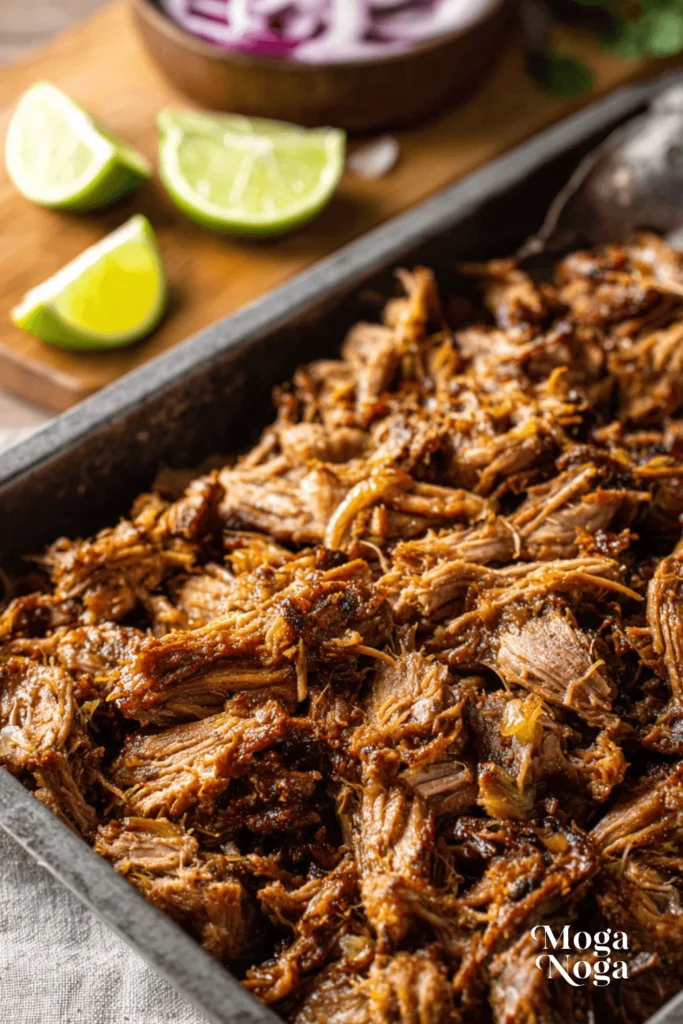
- Carnitas Platter for Sharing: Spread the pork on a serving dish with grilled citrus, herbs, and warm tortillas on the side. It feels generous, inviting, and perfect for relaxed entertaining.
Frequently Asked Questions
What cut of meat is best for carnitas?
Pork shoulder is the best choice for carnitas because it has the ideal balance of meat and fat. As it cooks slowly, that fat melts into the pork and creates the tender, juicy texture that makes carnitas so satisfying.
Can I make carnitas in a slow cooker?
Yes, carnitas works very well in a slow cooker. The meat becomes wonderfully tender, and then you can shred it and finish it in a skillet or under the broiler to get the crispy edges that define great carnitas.
Do I need orange juice for carnitas?
Orange juice is one of the classic ingredients in carnitas because it adds brightness and subtle sweetness. It does not make the dish taste fruity, but it does help balance the richness of the pork in a very natural way.
How do I get carnitas crispy without drying it out?
The key is to cook the pork until tender first, then crisp only the shredded edges over higher heat. Adding a little reduced cooking liquid after crisping helps keep the carnitas moist while preserving that irresistible texture.
Can I make carnitas ahead of time?
Yes, and it often tastes even better that way. You can cook and shred the pork in advance, store it with some of the liquid, and crisp it just before serving for the freshest texture.
Is carnitas spicy?
Traditional carnitas is usually more savory and rich than spicy. You can absolutely add heat with jalapeños, chipotle, or hot sauce, but the base recipe is typically mild and crowd-friendly.
What can I serve with carnitas besides tacos?
Carnitas is delicious in burritos, rice bowls, nachos, quesadillas, sandwiches, and salads. It is one of the most versatile pork dishes you can make, which is part of why so many people keep returning to it.
Nutrition Information
Here’s a simple look at what you can expect per serving, though exact numbers may vary depending on portion size and toppings.
Per Serving
- Calories: 420
- Protein: 29 g
- Carbohydrates: 6 g
- Sugar: 3 g
- Fat: 31 g
- Fiber: 1 g
Seasonal and Occasion Variations
One of the best things about carnitas is how easily it shifts with the season, the mood, or the reason you’re cooking in the first place. It can feel bright and relaxed in warm weather or rich and comforting when the air turns cold, and that flexibility makes it a recipe worth holding onto.
Spring/Summer
- Fresh Citrus Carnitas: Lean into lime, orange, cilantro, and crunchy toppings like radish and cabbage for a version that feels lighter, brighter, and perfect for warm evenings.
- Carnitas Taco Picnic Spread: Serve carnitas with chilled salsas, fruit, and tortillas for outdoor meals that feel easy, social, and just a little irresistible.
Fall
- Smoky Harvest Carnitas: Add a deeper touch of chipotle or roasted peppers and serve with warm beans or roasted vegetables for a more grounded, cozy feel.
- Carnitas Grain Bowls: Pair the pork with rice, farro, or seasoned quinoa and top with avocado and roasted corn for a hearty fall dinner that still feels fresh.
Winter
- Broiled Carnitas Comfort Plates: Crisp the pork a little more aggressively and serve it with warm tortillas, rich beans, and melted cheese for a meal that feels deeply comforting on colder nights.
- Carnitas-Stuffed Baked Potatoes: Spoon hot carnitas into fluffy baked potatoes with sour cream, salsa, and herbs for a cozy twist that feels especially welcome in winter.
Holiday Ideas
- Carnitas Party Bar: Set out carnitas with tortillas, sliders buns, toppings, and sauces so guests can build their own plates. It works beautifully for casual celebrations because it feels abundant without being fussy.
- Game Day Carnitas Nachos: Layer carnitas over chips with cheese, beans, jalapeños, and salsa for a crowd-pleasing platter that disappears fast.
My Recipe Tips
Every time I make carnitas, I’m reminded that the smallest choices often create the biggest difference. It’s not about making the dish complicated. It’s about understanding where the flavor deepens, where the texture changes, and where a little restraint can make the final result even more delicious.
- Pro Insight: Let the pork rest for a few minutes before crisping it. That small pause makes shredding easier and helps the meat hold onto more moisture before it hits the hot pan.
- Common Mistake to Avoid: Don’t drown the shredded pork in too much liquid after crisping. A little goes a long way, and too much can soften the edges you worked so hard to create.
- Flavor Enhancement Secret: A final squeeze of lime right before serving wakes everything up. It sharpens the richness of the carnitas and makes the whole dish taste more alive.
Conclusion
Carnitas is more than just slow-cooked pork. It’s the kind of meal that draws people in with its aroma, keeps them quiet through the first bite, and usually sends them back for more before the table has even settled.
It gives you tenderness, crisp edges, bold flavor, and the kind of flexibility that makes one recipe feel like five. Whether you serve it in tacos, bowls, nachos, or piled high on a platter for sharing, carnitas brings comfort and excitement to the same plate.
Make it once, and there’s a good chance it will become one of those recipes you crave a little unexpectedly and come back to with pleasure every single time.
Ingredients
- 4 pounds pork shoulder, cut into large chunks
- 2 teaspoons salt
- 1 teaspoon black pepper
- 2 teaspoons ground cumin
- 2 teaspoons dried oregano
- 6 cloves garlic, smashed
- 1 medium onion, roughly chopped
- 1 cup orange juice
- 2 tablespoons lime juice
- 2 bay leaves
- 1/2 cup chicken broth or water
- 2 tablespoons neutral oil or rendered pork fat, for crisping
Instructions
- Season the pork: Place the pork shoulder pieces in a large bowl and season with salt, black pepper, cumin, and oregano. Toss well so every piece is evenly coated.
- Build the braise: Transfer the pork to a Dutch oven or heavy pot. Add the garlic, onion, orange juice, lime juice, bay leaves, and chicken broth or water.
- Cook until tender: Cover and cook over low heat on the stovetop for about 3 to 3 1/2 hours, or until the pork is very tender and easy to shred. You can also cook it in a 300°F oven for the same amount of time.
- Shred the meat: Remove the pork from the pot and place it on a tray or large bowl. Use two forks to shred it into chunks and strands.
- Reduce the liquid: Simmer the remaining liquid in the pot for 10 to 15 minutes until slightly reduced and more concentrated.
- Crisp the carnitas: Heat oil or pork fat in a large skillet, or spread the pork on a baking sheet and broil it briefly. Cook until the edges are golden and crisp.
- Finish and serve: Toss the crisped pork with a few spoonfuls of the reduced cooking liquid and serve hot.
Notes
- Pork shoulder gives the best balance of tenderness and flavor.
- Do not skip the crisping step because that contrast is what makes carnitas special.
- Store leftovers with a little cooking liquid to keep the meat moist.
