
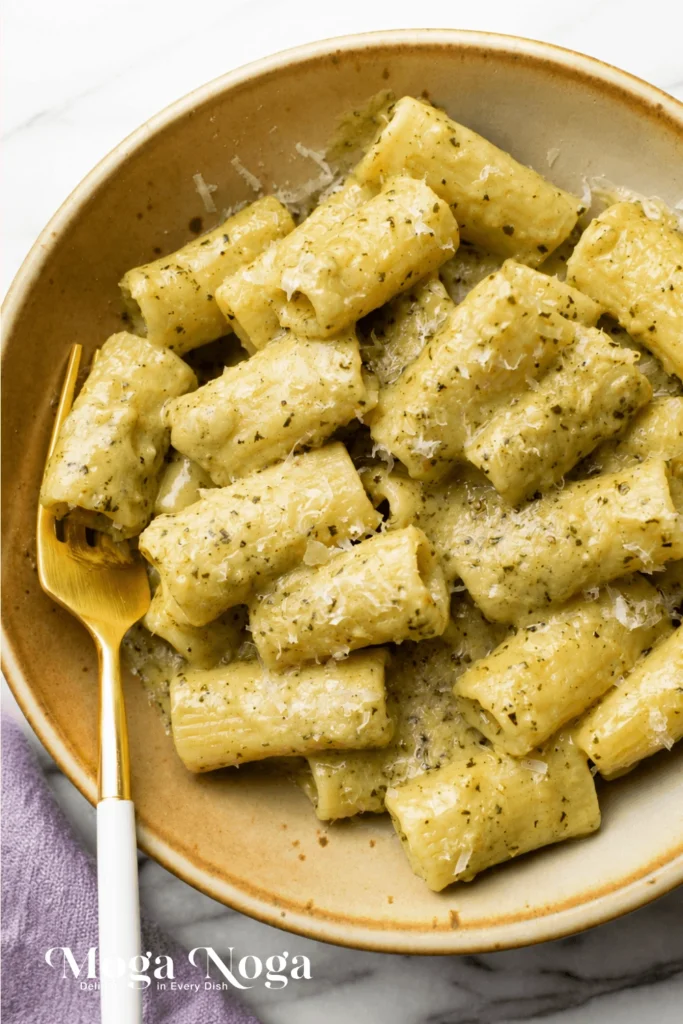
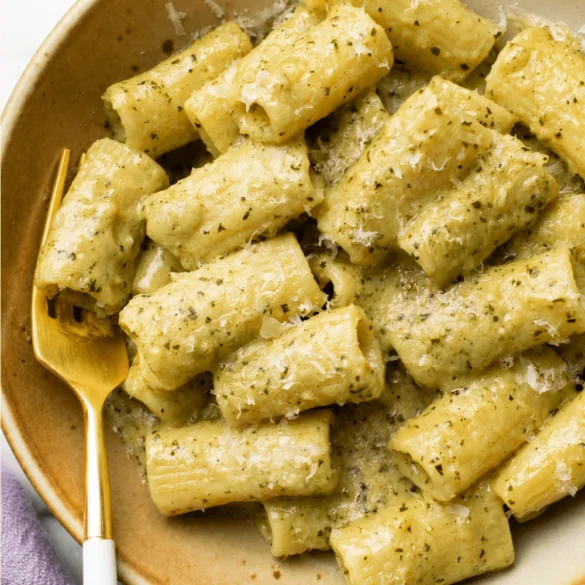
Creamy Pesto Pasta has that rare magic: it feels restaurant-level, yet it comes together with calm, simple comfort. The first forkful is silky, fragrant, and bright, with basil, garlic, cheese, and cream wrapping every strand. It is the kind of easy dinner that makes an ordinary night feel quietly special.
Table of Contents
Why You’ll Love This Recipe
There is something deeply satisfying about a pasta dish that looks elegant without asking you to work too hard for it. This recipe gives you lush flavor, a glossy sauce, and that fresh pesto aroma that fills the kitchen before anyone even sits down.
- Weeknight Luxury: Creamy Pesto Pasta tastes rich and impressive, but the method stays relaxed enough for a busy evening when you still want something beautiful on the table.
- Big Flavor, Simple Steps: Basil pesto brings herbal brightness, garlic brings warmth, parmesan adds salty depth, and cream softens everything into a sauce that clings smoothly to each bite.
- Flexible and Family-Friendly: You can serve it plain, add chicken, fold in vegetables, or make it a little lighter, which means it works for picky eaters, casual dinners, and special moments alike.
- Comfort with Freshness: The cream gives the dish its soft, velvety body, while the pesto keeps it lively, green, and never heavy in the way some cream sauces can feel.
Every bowl feels generous, inviting, and just a little indulgent, which is exactly why this is the kind of recipe people ask for again.
Detailed Ingredients and Instructions
The beauty of this dish is that every ingredient has a clear purpose, and together they create a sauce that feels smooth, balanced, and full of life.
Ingredients Breakdown
Here is what makes Creamy Pesto Pasta taste layered, fragrant, and satisfying from the first bite to the last.
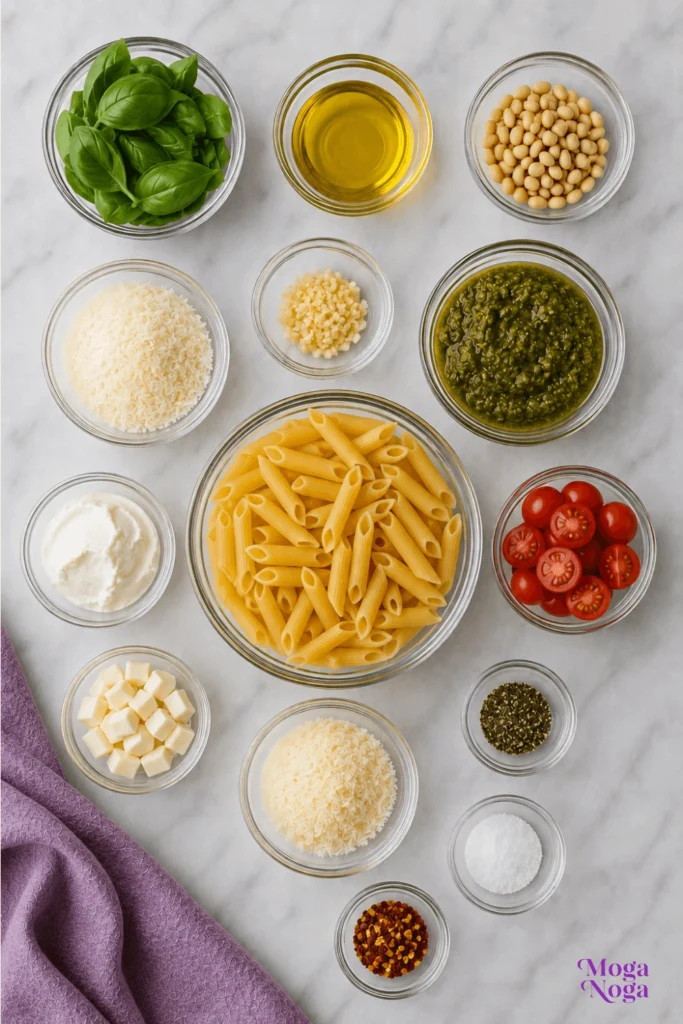
- Pasta: Choose a shape that can hold sauce well, such as penne, fusilli, rigatoni, or fettuccine. The pasta is the foundation, so cooking it until tender but still firm helps the final dish feel polished instead of soft or heavy.
- Basil Pesto: This is the heart of the flavor. A good pesto brings basil, olive oil, garlic, nuts, and cheese together in one spoonful, giving the sauce instant freshness and savory depth without needing a long simmer.
- Heavy Cream: Cream turns the pesto into a smooth, luxurious sauce. It softens the garlic and basil edges, helps the sauce coat the pasta evenly, and gives the dish that irresistible restaurant-style finish.
- Parmesan Cheese: Freshly grated parmesan melts better than pre-shredded cheese and adds salty, nutty flavor. It also helps thicken the sauce naturally, so the pasta feels creamy without becoming watery.
- Garlic: A little garlic builds warmth behind the pesto. Cooking it briefly before adding cream keeps the flavor mellow, fragrant, and rounded instead of sharp.
- Pasta Water: The starchy water is the secret connector. It loosens the sauce, helps it cling to the pasta, and creates a glossy finish that makes Creamy Pesto Pasta feel silky.
- Olive Oil: A small splash helps bloom the garlic and gives the sauce a smoother texture. It also echoes the olive oil already in the pesto, making the flavors feel connected.
- Salt and Black Pepper: Seasoning at the right moments wakes up the basil, balances the cream, and keeps every bite from tasting flat. Use salt carefully because pesto and parmesan already bring saltiness.
- Lemon Juice: Just a little lemon brightens the sauce at the end. It is not meant to make the dish sour; it simply lifts the cream and keeps the pesto flavor fresh.
Step-by-Step Instructions
Each step is designed to keep the sauce creamy, fragrant, and smooth, without overcooking the pesto or drying out the pasta.
- Boil the Pasta: Bring a large pot of salted water to a boil, then cook the pasta until al dente. This matters because firm pasta holds its shape and absorbs sauce better once it is tossed.
- Reserve Pasta Water: Before draining, scoop out some cloudy pasta water and keep it nearby. This small move gives you control later, letting you loosen the sauce gently while helping the cream, pesto, cheese, and pasta come together into glossy harmony instead of separating.
- Sauté the Garlic: Warm olive oil in a wide skillet over medium-low heat, then add the garlic and cook just until fragrant. This gentle start matters because garlic can turn bitter quickly, and bitter garlic would push against the sweetness of the cream and the freshness of the pesto.
- Warm the Cream: Pour in the heavy cream and let it heat slowly, stirring often. You are not trying to boil it hard; you want it warm enough to become smooth and ready to blend with the pesto.
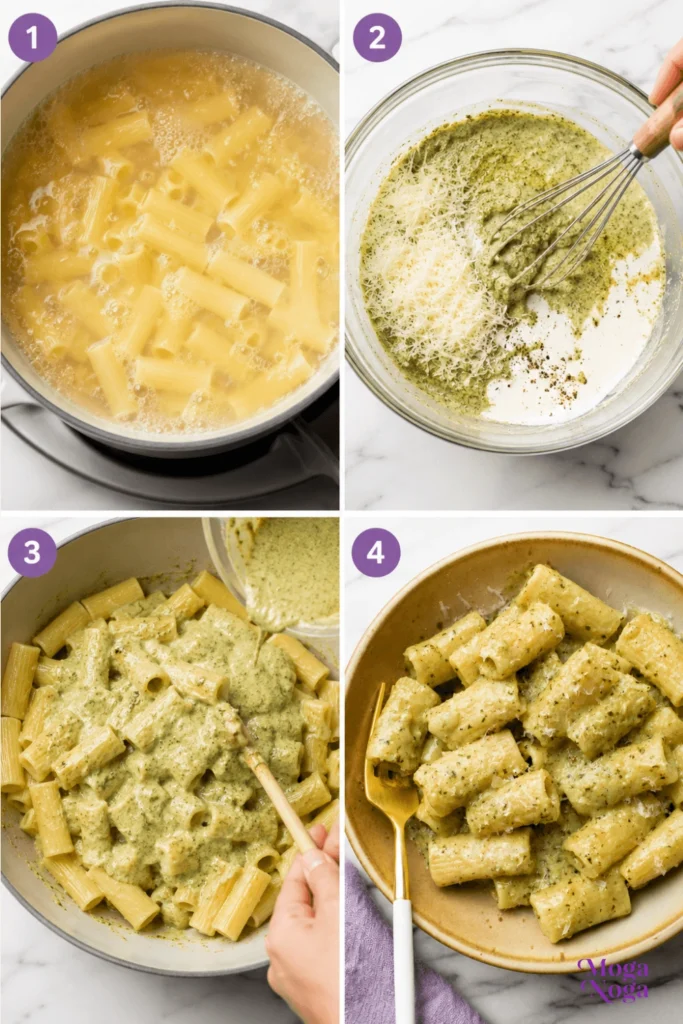
- Add the Pesto Gently: Lower the heat before stirring in the basil pesto. This matters because pesto tastes best when it stays bright and fresh, not cooked until dull. Gentle heat keeps the color greener and the basil flavor more alive.
- Toss in the Pasta: Add the drained pasta directly to the skillet and turn it through the sauce. This helps every curve, tube, or strand catch the creamy pesto coating before the sauce thickens too much.
- Use Pasta Water Slowly: Splash in reserved pasta water a little at a time until the sauce looks glossy and fluid. This step matters because it turns a thick cream mixture into a silky coating instead of a heavy layer sitting on top.
- Finish with Parmesan: Stir in freshly grated parmesan until it melts into the sauce. The cheese adds body, saltiness, and that savory finish that makes Creamy Pesto Pasta taste rounded and complete.
- Brighten and Serve: Add a small squeeze of lemon juice and a little black pepper, then taste before adding more salt. Serve while the sauce is warm, soft, and shining.
Tips, Variations, and Storage Options
A few small choices can make this recipe feel even more polished, whether you want a richer dinner, a lighter bowl, or leftovers that still taste fresh the next day.
Expert Tips
- Keep the Heat Gentle: Pesto and cream both prefer soft heat. If the skillet gets too hot, the sauce can lose its fresh flavor or feel oily, so keep everything calm and steady.
- Grate the Cheese Fresh: Fresh parmesan melts smoothly and gives better flavor. Pre-grated cheese can resist melting and may leave the sauce slightly grainy.
- Taste at the End: Pesto brands vary, and some are saltier than others. Taste once the parmesan is added, then adjust with salt, pepper, or lemon.
Delicious Variations
- Chicken Pesto Pasta: Add sliced grilled chicken or leftover roasted chicken for a fuller meal. The mild meat works beautifully with the creamy basil sauce.
- Vegetable Pesto Pasta: Stir in cherry tomatoes, spinach, zucchini, asparagus, or peas for freshness and color. These vegetables make the dish feel brighter without taking away its comfort.
- Spicy Pesto Pasta: Add red pepper flakes while warming the garlic. The heat stays subtle but gives the creamy sauce a more exciting edge.
Storage Options
- Refrigerator Storage: Store leftovers in an airtight container for up to three days. Reheat gently on the stove or in the microwave with a splash of milk, cream, or water to bring back the sauce.
- Freezing Option: Creamy sauces can change texture after freezing, so this dish is best enjoyed fresh. If needed, freeze in a sealed container and reheat slowly, stirring well as it warms.
Equipment Needed
You do not need anything fancy for Creamy Pesto Pasta. A few reliable kitchen basics are enough to help the sauce come together smoothly and make the cooking process feel easy.
- Large Pot: A roomy pot gives the pasta space to cook evenly and prevents it from sticking together. It also lets you salt the water properly for better flavor.
- Wide Skillet: A skillet with enough surface area makes tossing the pasta easier. It helps the sauce coat everything evenly instead of pooling at the bottom.
- Fine Grater: A fine grater turns parmesan into soft shreds that melt quickly. This gives the sauce a smoother finish and a more elegant texture.
- Tongs or Pasta Spoon: These tools help you lift, turn, and coat the pasta without breaking it. They also make serving easier and cleaner.
With these simple tools ready, the recipe feels less like a project and more like a quiet little dinner ritual you can trust anytime, with real ease.
Related Recipes
These dishes share the same easy comfort and fresh, satisfying flavor that make Creamy Pesto Pasta so lovable.
- Garlic Parmesan Pasta: A simple buttery pasta with plenty of parmesan, perfect when you want something savory, smooth, and quick beside chicken or vegetables.
- Tomato Basil Pasta: Bright tomatoes and fresh basil bring a lighter mood, making it a beautiful choice when you want pasta that feels juicy, colorful, and simple.
- Chicken Alfredo Pasta: Rich, creamy, and familiar, this recipe has the same comforting spirit, especially when you want a heartier dinner with tender chicken.
- Spinach Mushroom Pasta: Earthy mushrooms and soft spinach make this a cozy-style pasta without leaning too heavy, and the flavors pair naturally with parmesan.
- Lemon Garlic Shrimp Pasta: This one brings brightness and a little elegance, giving seafood lovers a fresh option that still feels easy enough for a weeknight.
Pairing/Serving Suggestions
Creamy pesto already brings richness, basil fragrance, and a silky finish, so the best pairings either refresh the plate, add crunch, or make the meal feel more complete.
Drink Pairings
- Sparkling Water with Lemon: The bubbles and citrus keep each bite feeling clean, especially when the sauce is extra creamy and generous.
- Iced Green Tea: Its mild, fresh flavor works well with basil and garlic without overpowering the pasta.
- Light White Wine: For adults, a crisp white wine can balance the cream and highlight the herbal pesto notes.
Side Pairings
- Simple Green Salad: A salad with cucumber, greens, and a sharp vinaigrette brings freshness that cuts through the creamy sauce beautifully.
- Garlic Bread: Crisp edges and buttery garlic make the meal feel fuller, especially when you want something to swipe through the last bit of sauce.
- Roasted Vegetables: Zucchini, broccoli, asparagus, or cherry tomatoes add color, texture, and a deeper roasted sweetness.
Presentation Ideas
- Twirl and Top: Serve the pasta in shallow bowls, then finish with parmesan, black pepper, and a small spoon of pesto for a polished look.
- Add Fresh Basil: A few basil leaves on top make the dish look brighter and help announce the flavor before the first bite.
Frequently Asked Questions
Can I use store-bought pesto for this recipe?
Yes, store-bought pesto works very well, especially when you choose one with a fresh basil aroma and good olive oil flavor. Since brands vary in saltiness, taste the sauce before adding extra salt. A small squeeze of lemon can also wake up jarred pesto and make Creamy Pesto Pasta taste brighter.
What pasta shape works best?
Short shapes like penne, fusilli, rigatoni, and shells are excellent because they catch the sauce in their ridges and curves. Long pasta like fettuccine or linguine also works if you prefer a more elegant twirl. The most important thing is cooking it al dente, so it stays tender but not mushy.
Can I make this recipe without heavy cream?
Yes. You can use half-and-half for a lighter sauce, though it will be less rich. You can also use whole milk with extra parmesan, but the sauce may be thinner. For the smoothest texture, warm dairy gently and avoid boiling once the pesto is added.
How do I keep the sauce from getting oily?
Use gentle heat and avoid cooking the pesto aggressively. Pesto contains olive oil, and high heat can make it separate. Add pesto after the cream is warm, then toss with pasta and pasta water until everything looks glossy and smooth.
Can I add protein to this pasta?
Absolutely. Grilled chicken, shrimp, salmon, turkey meatballs, or crispy chickpeas all work beautifully. Keep the protein simply seasoned so the basil pesto remains the main flavor. Add cooked protein at the end, just long enough to warm it through without drying it out.
Can I make it ahead of time?
You can prepare parts ahead, but the pasta tastes best right after tossing. Cook the pasta, save a little water, and keep the sauce ingredients ready. When it is time to eat, warm the cream, stir in pesto, and toss everything fresh. This keeps the sauce silky instead of thick or dry. A quick finish makes the basil flavor feel alive and the whole bowl more inviting, warm, glossy, balanced, and deeply satisfying.
Nutrition Information
This is an approximate guide, and the final numbers can change based on pasta shape, pesto brand, cream amount, and serving size. Use it as a helpful estimate rather than a strict label, especially if you add protein, vegetables, or extra cheese.
Per Serving
- Calories: About 520, giving the dish enough richness to feel satisfying as a main meal.
- Protein: Around 15 grams, mostly from pasta and parmesan, with more if you add chicken, shrimp, or chickpeas.
- Carbohydrates: About 58 grams, making this a comforting energy-rich dinner that feels filling without needing many extras.
- Sugar: Around 3 grams, depending on the pesto and dairy used.
- Fat: About 26 grams, mainly from cream, olive oil, pesto, and cheese.
- Fiber: Around 3 grams, or more if you use whole wheat pasta or add vegetables.
Seasonal and Occasion Variations
Creamy Pesto Pasta is easy to adapt through the year because basil, cream, cheese, and pasta welcome so many fresh toppings and simple mood changes. Think of the base recipe as your canvas, then adjust the color, texture, and richness to match the season.
Spring/Summer
- Fresh Tomato Basil Finish: Add halved cherry tomatoes, extra basil, and a light squeeze of lemon for a bright warm-weather version that tastes fresh, juicy, and lively.
Fall
- Roasted Vegetable Pesto Bowl: Fold in roasted butternut squash, mushrooms, or broccoli for deeper flavor and a heartier texture that still keeps the sauce smooth.
Winter
- Creamy Chicken Pesto Comfort: Add warm shredded chicken and extra parmesan for a fuller cold-night dinner that feels soothing, generous, and deeply satisfying.
Holiday Ideas
- Elegant Pesto Pasta Platter: Serve the pasta in a wide dish with fresh basil, parmesan curls, and toasted pine nuts so it feels special enough for a relaxed celebration.
My Recipe Tips
I love this recipe most when the sauce looks glossy, the basil still smells fresh, and the pasta feels coated rather than drowned.
- Pro Insight: Add the pesto after lowering the heat. This keeps the color brighter and protects the delicate basil flavor from turning muted. It also helps the sauce taste fresher, almost as if the basil was stirred in at the last possible second.
- Common Mistake to Avoid: Do not drain all the pasta water. Even a small splash can rescue a sauce that feels too thick and help Creamy Pesto Pasta cling beautifully. Add it gradually, because a little starch can transform the texture quickly.
- Flavor Enhancement Secret: Finish with lemon juice and black pepper. That tiny burst of brightness makes the cream taste lighter and the parmesan taste sharper. It gives the final bite a clean lift instead of letting the sauce feel too rich.
Conclusion
Creamy Pesto Pasta is the kind of recipe that proves simple ingredients can still feel magnetic when they are handled with care. The basil brings freshness, the cream brings softness, the parmesan brings savory depth, and the pasta gathers it all into one silky, comforting bowl.
What makes this dish so useful is how easily it fits into real life. You can make it plain when the evening feels rushed, dress it up with chicken or shrimp when you want something more filling, or add vegetables when you want color and freshness. It never asks for perfection, only a little attention.
It is also a recipe that rewards small details. Salting the pasta water, saving a scoop of that starchy water, lowering the heat before adding pesto, and finishing with lemon may sound simple, but those choices are what turn a basic creamy pasta into something memorable. Each step protects the texture and keeps the flavor balanced.
Most of all, this recipe gives you that quiet dinner-table moment when everyone slows down for the first bite. The sauce is smooth, the flavor is bright, and the whole dish feels generous without being complicated. Make it once, and Creamy Pesto Pasta may become one of those trusted meals you return to whenever you want comfort with a little sparkle. Serve it hot, share it proudly, and let that creamy basil aroma do what good food always does best: pull people closer to the table with hungry smiles, ready forks, and one more spoonful waiting nearby tonight.
Ingredients
- 12 ounces pasta, such as penne, fusilli, rigatoni, fettuccine, or linguine
- 1 tablespoon olive oil
- 2 garlic cloves, minced
- 1 cup heavy cream
- 1/2 cup basil pesto
- 1/2 cup freshly grated parmesan cheese
- 1/3 cup reserved pasta water, plus more if needed
- 1 teaspoon fresh lemon juice
- Salt, to taste
- Black pepper, to taste
- Fresh basil, for garnish
- Extra parmesan, for serving
Instructions
- Bring a large pot of salted water to a boil. Add the pasta and cook until al dente according to package directions.
- Before draining, reserve at least 1/3 cup of the pasta water. Drain the pasta and set it aside.
- In a wide skillet, warm the olive oil over medium-low heat. Add the minced garlic and cook for about 30 seconds, just until fragrant.
- Pour in the heavy cream and stir gently. Let it warm for 2 to 3 minutes, but do not let it boil hard.
- Reduce the heat to low, then stir in the basil pesto until the sauce looks smooth and creamy.
- Add the cooked pasta to the skillet and toss until every piece is coated in the creamy pesto sauce.
- Add reserved pasta water a little at a time until the sauce becomes glossy and silky.
- Stir in the parmesan cheese until melted and fully combined.
- Add lemon juice and black pepper. Taste, then adjust with salt if needed.
- Serve warm with fresh basil, extra parmesan, and another light sprinkle of black pepper.
