
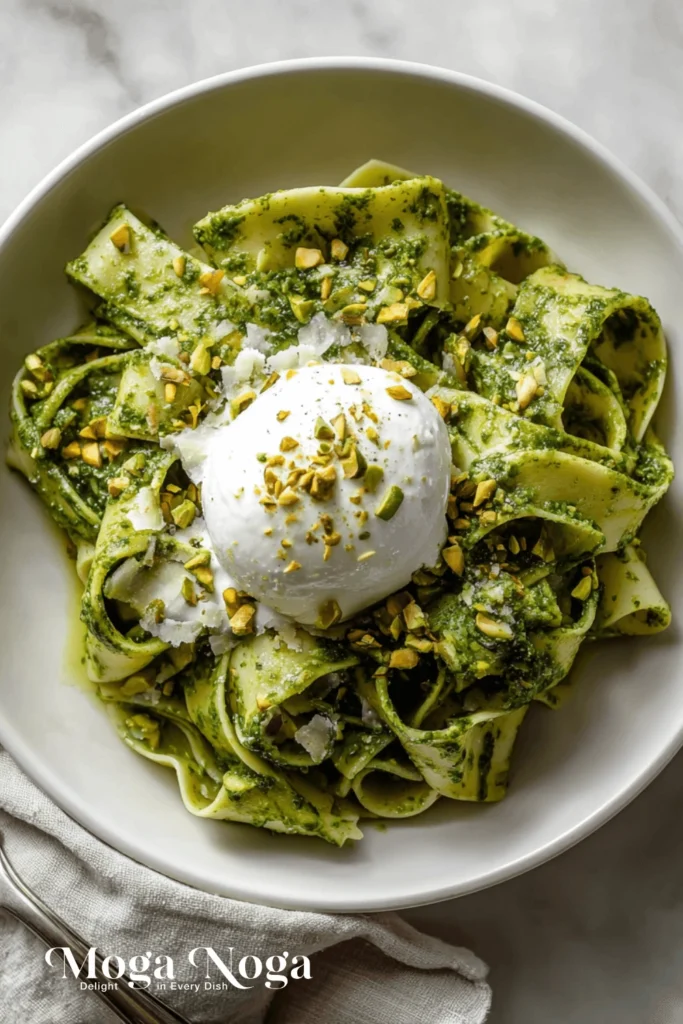
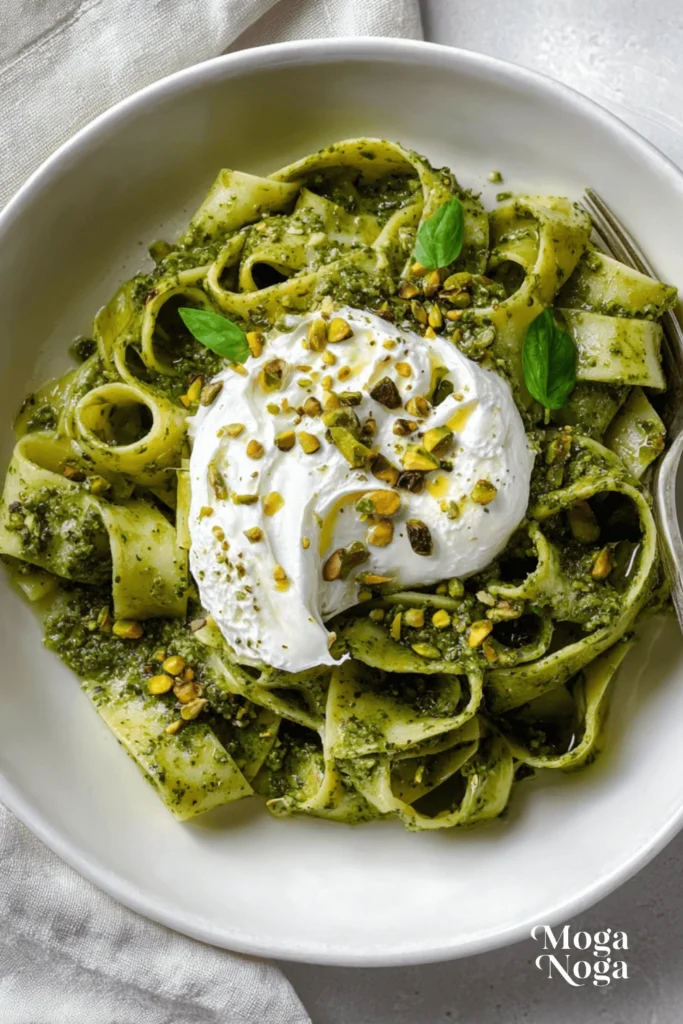
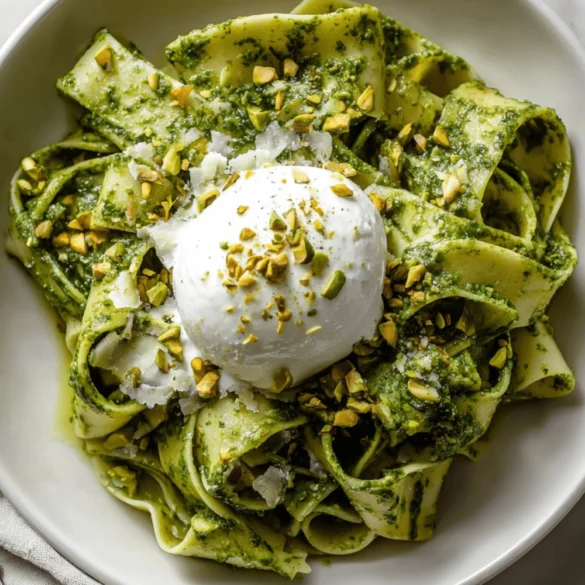
Pistachio pesto pasta with burrata is more than just a beautiful plate of food—it’s an experience in flavor and texture. Starting with a base of al dente pasta tossed in a nutty, vibrant pistachio pesto, and finished with a soft, creamy ball of burrata cheese, this dish hits the sweet spot between rustic charm and gourmet elegance.
Whether you’re cooking to impress guests or just treating yourself to something luxurious yet simple, pistachio pesto pasta with burrata delivers bold taste with minimal effort. It’s the kind of recipe that feels special but doesn’t demand hours in the kitchen.
Table of Contents
Why You’ll Love This Recipe
There’s something undeniably comforting about pasta, and when it’s paired with the creamy richness of burrata and the distinct nuttiness of pistachios, you get a dish that feels both indulgent and fresh. Here are a few reasons why this pistachio pesto pasta with burrata deserves a spot in your recipe rotation:
- Rich and Creamy Texture: The burrata melts into the warm pasta, creating a luscious coating without the need for heavy cream.
- Elevated Flavor Profile: The pistachios add an earthy, subtly sweet note to the pesto, a welcome change from the traditional basil-pine nut combination.
- Quick to Make: You can have this entire dish on the table in under thirty minutes, making it perfect for busy weeknights or last-minute dinner parties.
- Customizable: It pairs well with everything from roasted veggies to grilled chicken or even prosciutto, letting you adjust it to your taste or the season.
- Gorgeous Presentation: The burrata placed on top adds a dramatic, creamy finish that’s perfect for a photo-worthy plate.
Detailed Ingredients and Instructions
Making pistachio pesto pasta with burrata at home is easier than you think. The ingredients are simple, but the flavor is anything but ordinary. Below is a breakdown of the key components and the process, step by step.
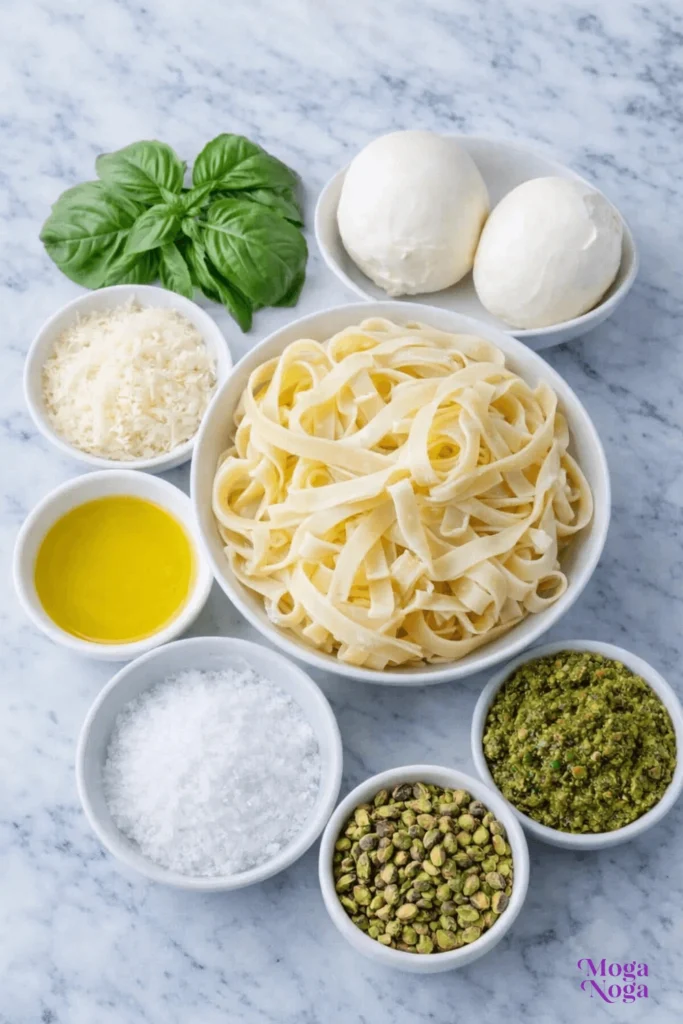
1. Choosing the Right Pasta
The foundation of this dish begins with your pasta. Short shapes like rigatoni, fusilli, or orecchiette work wonderfully because they hold onto the pesto in their crevices. But long noodles like linguine or spaghetti also provide a lovely backdrop for the sauce and burrata to shine.
2. Crafting the Pistachio Pesto
At the heart of this dish is the pistachio pesto—a twist on tradition that replaces pine nuts with toasted pistachios. The flavor is slightly sweeter and more robust. To make the pesto, you’ll need fresh basil, garlic, olive oil, grated Parmesan, lemon zest, and of course, shelled pistachios.
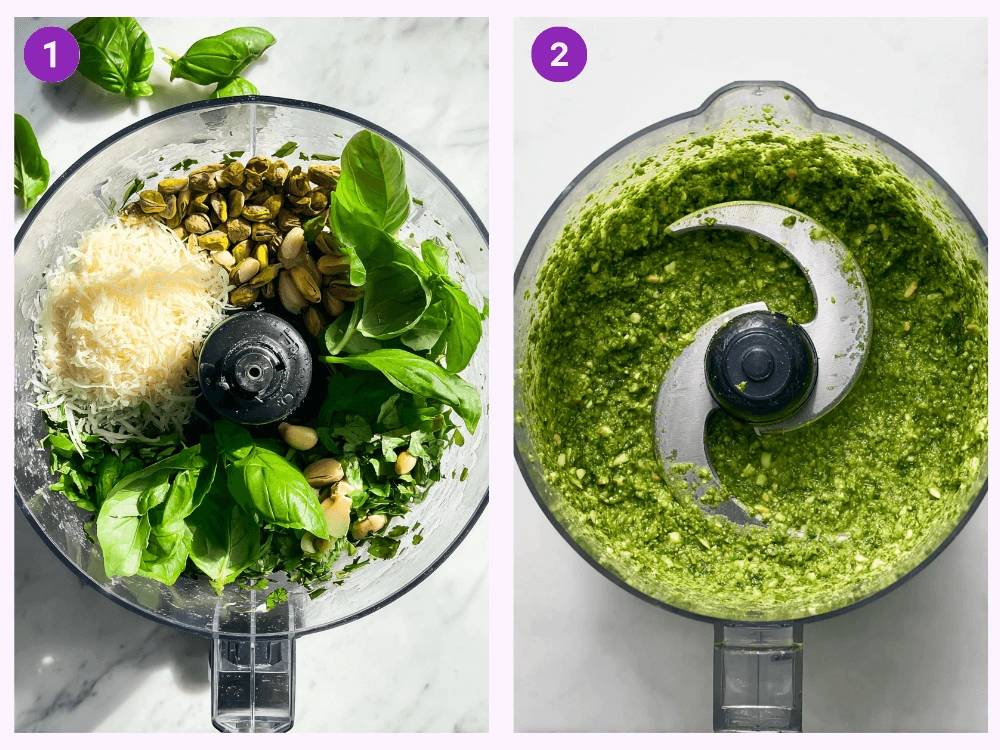
To prepare, simply blend everything in a food processor or blender until smooth. Taste and adjust the salt or lemon juice as needed. The result is a bright, nutty green sauce with just the right amount of tang and depth.
3. Cooking and Assembling the Dish
Once your pasta is cooked al dente, reserve a bit of the pasta water and toss the noodles with the freshly made pesto. The starch from the water helps emulsify the pesto and coat each strand or bite of pasta evenly.
Plate the pasta and then place a ball of burrata right on top. The warmth from the pasta will gently soften the cheese, allowing you to break it open just before serving for a dramatic, creamy finish.
Tips, Variations, and Storage Options
This dish is fantastic as written, but there’s always room to play. Here are some ways to customize or store pistachio pesto pasta with burrata:
Tips for Success
- Don’t over-blend the pesto: You want it smooth but not pureed into a paste.
- Use quality olive oil: Since the pesto has few ingredients, a good extra virgin olive oil really makes a difference.
- Season the pasta water well: This is your only chance to get flavor inside the pasta itself.
Tasty Variations
- Add roasted cherry tomatoes: Their sweet acidity balances the richness of the burrata.
- Top with crispy prosciutto: For a salty crunch that complements the creamy cheese.
- Swap in arugula: If basil isn’t available, arugula adds a peppery bite that pairs well with pistachios.
Storage Notes
Pesto can be stored in the fridge for up to 5 days or frozen for a month. Once combined with pasta and burrata, it’s best eaten fresh, as the burrata doesn’t reheat well. However, you can store leftovers in the fridge for a day or two and enjoy them cold or gently reheated without the cheese.
Equipment Needed
To make pistachio pesto pasta with burrata efficiently and without fuss, you won’t need anything fancy—just a few reliable kitchen tools that make the process smooth and enjoyable.
- 1. Food Processor or Blender: This is essential for preparing the pistachio pesto. A food processor gives you more control over texture, but a high-powered blender works just as well for a silky smooth finish.
- 2. Large Pot: A big pot allows the pasta to cook evenly without clumping. Make sure you salt the water well—it’s your first layer of seasoning.
- 3. Slotted Spoon or Pasta Tongs: Helpful for transferring the pasta directly to the pesto without draining all the pasta water. This lets you control how much water goes into the sauce.
- 4. Mixing Bowl (Optional): If you prefer to toss your pasta with pesto off the heat, a mixing bowl gives you more control and avoids overcooking the pesto.
- 5. Serving Plates or Pasta Bowls: A shallow bowl or plate showcases the burrata beautifully and allows room for garnishes like crushed pistachios or fresh herbs.
Related Recipes
If you love the flavor combination in pistachio pesto pasta with burrata, you’ll likely enjoy these related dishes. They share similar textures, vibrant sauces, or rich dairy components that make them equally comforting and satisfying.
- Lemon Ricotta Pasta: A fresh, citrusy pasta tossed in creamy ricotta cheese, lemon zest, and cracked pepper. It’s equally fast to prepare and feels light but flavorful.
- Basil Pesto Pasta with Grilled Chicken: A classic version of pesto pasta using traditional basil and pine nuts, topped with grilled chicken for a hearty, protein-rich meal.
- Spicy Burrata Rigatoni: Tender rigatoni coated in a bold, chili-infused tomato sauce, then topped with creamy burrata for a luxurious finish. It’s rich, slightly fiery, and perfectly balanced—ideal for when you want comforting pasta with a kick.
- Tomato Burrata Salad with Pesto Drizzle: If you want a cold dish with the same ingredients, try layering fresh tomatoes, burrata, and a spoonful of pistachio or basil pesto over the top. Perfect as an appetizer or light summer dinner.
- Spinach and Walnut Pesto Pasta: A variation of the classic that uses spinach and toasted walnuts for a deeper, earthy flavor. Great for fall or winter.
Pairing/Serving Suggestions
Pistachio pesto pasta with burrata is rich, creamy, and balanced—but it shines even more when paired with the right sides or drinks. Here are some ideas to create a complete, memorable meal.
Best Sides to Serve
- Crispy Garlic Bread: Toasted slices of sourdough brushed with garlic butter make the perfect vehicle for scooping up extra pesto and burrata.
- Arugula Salad with Lemon Vinaigrette: A light, peppery salad with lemon and shaved Parmesan cuts through the richness of the dish.
- Grilled Zucchini or Asparagus: Simple roasted or grilled vegetables bring brightness and a bit of charred flavor.
Serving Tips
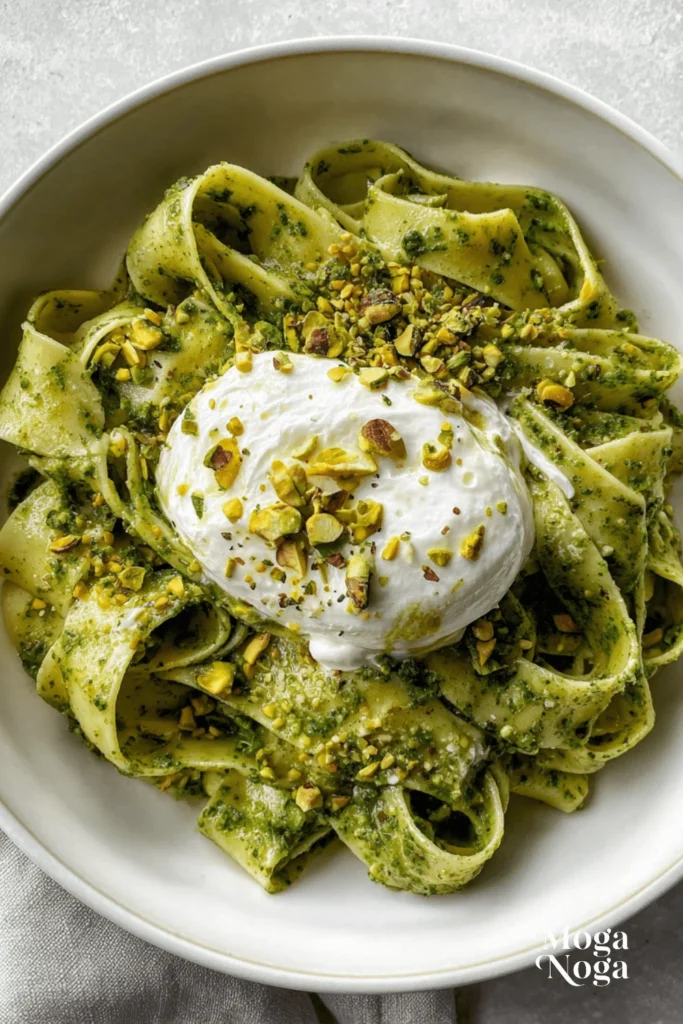
Serve the dish warm so the burrata begins to melt into the pasta. Garnish with crushed pistachios, fresh basil, lemon zest, or a drizzle of olive oil. For a dinner party, plate each portion individually with a full ball of burrata for visual impact and a creamy center.
Frequently Asked Questions
Can I use store-bought pesto for this recipe?
Yes, but keep in mind that homemade pistachio pesto gives you better control over flavor and texture. If using store-bought, choose one with clean ingredients and no fillers.
What can I substitute for burrata if I can’t find it?
Fresh mozzarella is the closest substitute, but it won’t offer the same creamy interior. You could also try ricotta or even a soft goat cheese if you enjoy a tangier profile.
Is this dish vegetarian?
Yes, as long as you use a Parmesan-style cheese that doesn’t include animal rennet in your pesto.
Can I make this nut-free?
Absolutely. Replace pistachios with sunflower seeds or pepitas (pumpkin seeds). It won’t taste exactly the same, but it still creates a flavorful pesto.
How long does the pesto last in the fridge?
Homemade pistachio pesto lasts up to 5 days when stored in an airtight container. Cover the surface with a thin layer of olive oil to help preserve its color.
Nutrition Information
Pistachio pesto pasta with burrata may feel indulgent, but it’s also filled with wholesome ingredients that provide both comfort and nutrition. Here’s a general breakdown per serving, assuming four servings total. Note that these values can vary slightly depending on the type of pasta and exact quantities used.
- Calories: Approximately 580 per serving. Most of the calories come from the olive oil in the pesto and the creamy burrata cheese.
- Protein: Around 17 grams per serving. The burrata adds a solid dose of protein, and if you use a high-protein pasta (like chickpea or lentil-based), the amount increases even more.
- Carbohydrates: Roughly 52 grams per serving. Standard pasta is carb-rich, making this recipe an energy-boosting option, especially for lunch or dinner.
- Fats: About 36 grams per serving. These are mostly heart-healthy fats from olive oil and pistachios. Burrata contributes saturated fat, but in moderation, it fits into a balanced diet.
- Fiber: Approximately 3 to 4 grams. Pistachios and basil add fiber, and you can increase it by choosing whole grain pasta.
- Other Nutrients: This dish is rich in Vitamin E (from pistachios), calcium (from cheese), and iron (from basil and pasta). It’s also a good source of antioxidants thanks to the fresh herbs and nuts.
Seasonal and Occasion Variations
Pistachio pesto pasta with burrata is wonderfully versatile, and with a few small tweaks, you can tailor it to any season or special event. Here are ideas to help you adapt it year-round.
Spring Version
- Add fresh peas or asparagus tips for a pop of green.
- Garnish with edible flowers like pansies or nasturtiums for a bright, seasonal flair.
- Serve with lemon zest and a bit of mint for extra freshness.
Summer Version
- Toss in halved cherry tomatoes or grilled corn kernels.
- Serve chilled or at room temperature for a picnic or garden party.
- Pair it with chilled rosé and a fruit-based dessert like peach cobbler.
Fall Version
- Swap basil for arugula or baby kale in the pesto.
- Add roasted butternut squash cubes or sautéed mushrooms for a heartier feel.
- A touch of nutmeg in the pesto adds warm depth.
Winter Version
- Use spinach and roasted garlic in the pesto for a deeper, cozy flavor.
- Serve with warm garlic bread and a side of roasted Brussels sprouts or root vegetables.
- Top the pasta with a drizzle of truffle oil for a festive, luxurious touch.
Special Occasions
- Romantic Dinner: Plate individual servings with a whole burrata ball and sprinkle crushed pink peppercorns for color.
- Holiday Brunch: Serve as a warm pasta salad, pre-tossed with pesto, and topped with shaved Parmesan and microgreens.
- Dinner Party: Offer it as a first course or small plate, paired with a simple sparkling wine and a light salad.
My Recipe Tips
To help your pistachio pesto pasta with burrata turn out perfectly every time, here are a few of my favorite tried-and-true tips. These little details make a big difference in flavor and texture.
- Toast the Pistachios: Always toast the pistachios lightly before blending them into pesto. It deepens their flavor and adds a subtle smoky note. Just a few minutes in a dry pan or oven will do the trick.
- Use Room Temperature Burrata: Take the burrata out of the fridge about 20 minutes before serving. Cold burrata won’t melt into the pasta the same way, and you want that creamy center to ooze out when you break it open.
- Reserve Pasta Water: This is key! Pasta water contains starch that helps bind the pesto to the pasta. Add a few spoonfuls when tossing to create a silky sauce that clings to every bite.
- Don’t Overcook the Pasta: Aim for a true al dente texture so the pasta holds its shape and doesn’t become mushy when tossed with the warm pesto.
- Garnish with Intention: Fresh basil leaves, crushed pistachios, lemon zest, and a drizzle of olive oil aren’t just decorative—they enhance flavor and texture, too. Don’t skip them.
- Make the Pesto Ahead: You can make the pesto a day in advance to save time. Just store it in an airtight jar with a layer of olive oil on top to prevent browning.
- Add Protein if Desired: While the burrata provides a creamy protein source, you can bulk up the meal with grilled shrimp, pan-seared chicken breast, or roasted chickpeas for a plant-based twist.
Conclusion
Pistachio pesto pasta with burrata brings together everything we love about comfort food—creamy textures, vibrant flavors, and simplicity that doesn’t sacrifice elegance. It’s the kind of dish that feels elevated enough for guests yet cozy enough for a quiet night in. With the rich nuttiness of pistachios, the aromatic freshness of basil, and the silky luxury of burrata, every bite is a balance of indulgence and freshness.
Whether you’re exploring new ways to enjoy pasta or simply looking to impress without stress, this recipe delivers on every front. You don’t need hours in the kitchen, complicated tools, or hard-to-find ingredients. Just quality basics and a bit of love go a long way.
The best part? It’s endlessly adaptable. You can dress it up or down depending on the season, serve it warm or at room temperature, and even pair it with a range of sides or proteins depending on the occasion. It fits just as well on a summer patio table as it does in a cozy winter kitchen.
So next time you’re in the mood for a pasta dish that feels both nourishing and special, turn to pistachio pesto pasta with burrata. It might just become your new go-to recipe—whether for a weekday dinner, a brunch gathering, or a romantic evening in.
And don’t forget to bookmark this one. Recipes like this are the secret weapons of home cooks who want effortless flair and unforgettable flavor all in one bowl. Pistachio pesto pasta with burrata isn’t just a dish—it’s a feeling.
Ingredients
12 oz pasta (fusilli, rigatoni, or spaghetti)
Salt, for boiling water
1 cup shelled pistachios, unsalted
2 cloves garlic
½ cup freshly grated parmesan cheese
½ cup olive oil
Zest of 1 lemon
2 tablespoons fresh lemon juice
¼ teaspoon black pepper
¼ teaspoon salt
To finish
1 ball (8 oz) burrata cheese
Extra olive oil, for drizzling
Fresh basil or parsley, chopped (optional)
Instructions
Bring a large pot of salted water to a boil and cook the pasta according to package instructions until al dente. Reserve ½ cup of pasta water, then drain.
In a food processor, add pistachios, garlic, parmesan cheese, lemon zest, lemon juice, salt, and black pepper. Pulse until finely chopped.
With the processor running, slowly drizzle in olive oil until a smooth, creamy pesto forms.
Transfer the pesto to a large bowl. Add the hot cooked pasta and toss to coat evenly, adding reserved pasta water a little at a time if needed.
Taste and adjust seasoning as needed.
Transfer the pasta to a serving dish and gently tear the burrata over the top.
Finish with a drizzle of olive oil and garnish with fresh herbs if desired. Serve immediately.
