
Sausage and egg casserole is the kind of dish that instantly brings people together. Whether it’s a lazy weekend morning, a cozy holiday brunch, or just a Wednesday when you’re craving something warm and filling, this casserole has your back. It’s hearty, flavorful, and endlessly customizable—just the way a real comfort food should be.
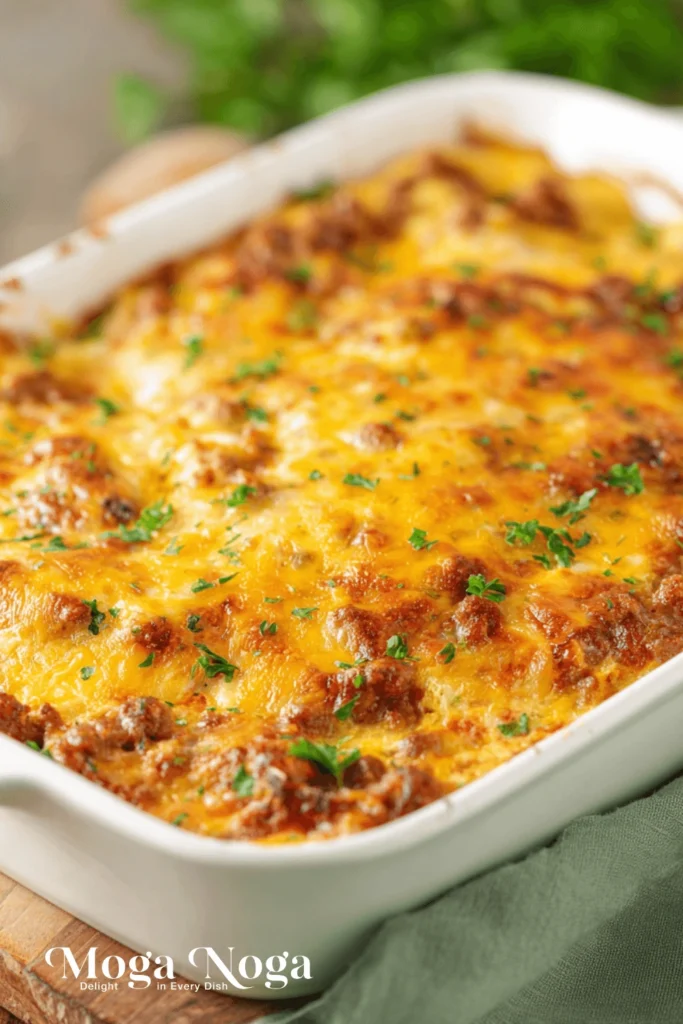
What makes sausage and egg casserole so timeless is its combination of simple ingredients and satisfying results. We’re talking layers of savory sausage, fluffy eggs, melty cheese, and often a base of bread or potatoes to soak up all that rich goodness. It’s that kind of make-ahead meal that feels fancy but is secretly effortless—ideal for both busy families and casual gatherings.
The best part? You don’t need to be a chef to get this one right. In fact, once you try it, you’ll probably end up making it part of your regular rotation. From its golden-baked crust to its creamy interior, sausage and egg casserole hits every comfort note in the book.
So if you’re searching for a reliable crowd-pleaser or just want to upgrade your breakfast game, you’re in the right place. This guide will walk you through everything you need to know—ingredients, step-by-step instructions, tips, serving ideas, storage, and more. Let’s dig in.
Table of Contents
Why You’ll Love This Recipe
The magic of sausage and egg casserole lies in how easy it is to make—and how much flavor you get out of it. Here’s why this dish deserves a spot on your table:
- It’s Incredibly Easy to Assemble
You can toss this casserole together in about fifteen minutes. The ingredients are common kitchen staples—sausage, eggs, cheese, milk, and bread or hash browns—so it’s likely you already have most of what you need. Just brown the sausage, mix the egg filling, layer it all up, and bake. - Perfect for Make-Ahead Meals
One of the most convenient things about sausage and egg casserole is that it’s meal-prep friendly. You can assemble it the night before, pop it in the fridge, and bake it fresh in the morning. That makes it perfect for holidays, brunches with friends, or busy weekday mornings when you don’t want to fuss with a stovetop. - Feeds a Crowd
This casserole is a volume dish. Whether you’re serving four or twelve, it scales up beautifully. Just double the recipe, use a larger baking dish, and you’re set. It’s great for potlucks, family reunions, or bringing to a neighbor’s brunch. - Totally Customizable
Don’t like pork sausage? Swap in turkey sausage or a vegetarian crumble. Want to add more vegetables? Toss in chopped bell peppers, mushrooms, spinach, or tomatoes. Prefer a sharper flavor? Try cheddar, pepper jack, or goat cheese. You can even add herbs or spices to reflect your own taste preferences. - It’s Seriously Delicious
At the end of the day, what matters most is flavor—and sausage and egg casserole delivers. The eggs bake up creamy and tender, the sausage brings that bold, savory bite, and the cheese melts into every crevice for that irresistible gooey finish. - Freezer Friendly
If you’re the kind of person who loves having emergency meals on hand, you’ll be glad to know this casserole freezes beautifully. Just bake, cool, slice, and wrap. Next time you’re in need of a quick breakfast or lunch, just reheat and enjoy. - Ideal for All Ages
Kids love it. Adults love it. Even picky eaters tend to give it a thumbs-up. Whether you’re feeding toddlers, teens, or grandparents, this is one of those rare dishes that works for just about everyone. - Budget-Friendly Brunch
With ingredients that are affordable and easy to find, this is a great recipe when you’re cooking on a budget but still want something satisfying and special. A single casserole can easily feed a big family—or make several meals for just a couple of people. - Not Just for Breakfast
Although it’s often served in the morning, sausage and egg casserole makes a fantastic dinner too. Pair it with a green salad, a slice of crusty bread, and you’ve got a balanced meal that feels complete without a lot of work.
Detailed Ingredients and Instructions
When it comes to making the perfect sausage and egg casserole, the beauty lies in its simplicity. It doesn’t demand fancy ingredients or advanced techniques—just a few everyday items layered and baked to perfection. But to truly master it, it’s worth diving into each element to understand what works best and how small changes can completely transform the final result.
The Core Ingredients Explained
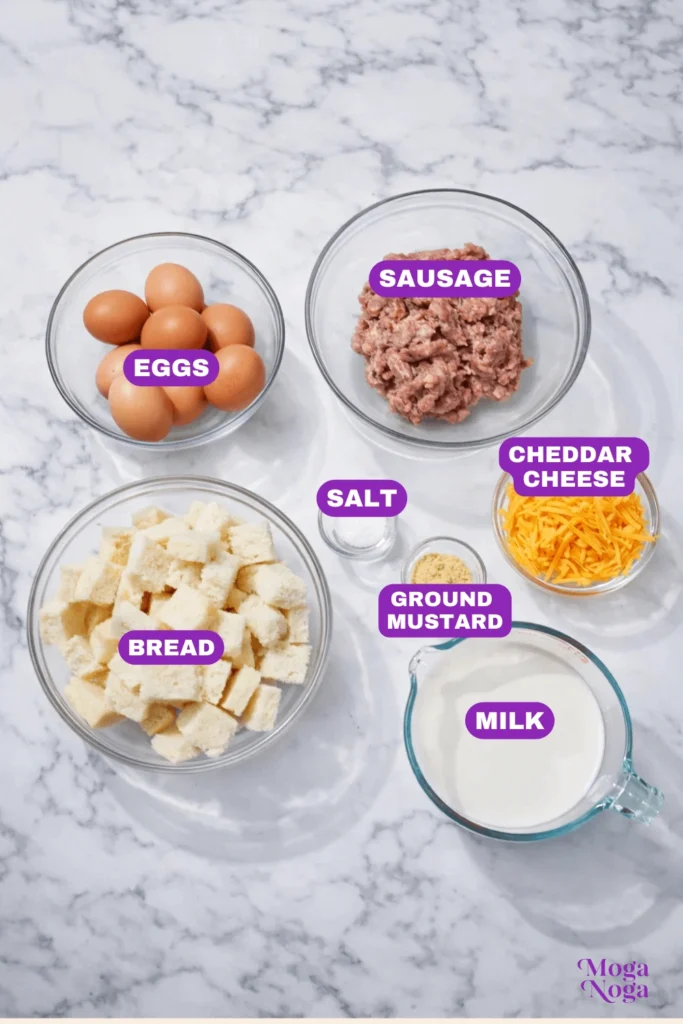
Sausage
Start with a good-quality ground sausage. Traditional pork breakfast sausage is the classic choice, offering a rich, savory profile that pairs beautifully with eggs and cheese. But you’re not limited to just pork. You can opt for turkey sausage for a leaner version or a spicy chorizo if you’re looking for a bolder kick. Make sure to cook it fully and crumble it before adding it to your casserole layers. Drain any excess grease so the final dish doesn’t turn out soggy.
Eggs
The star of the show. Use fresh, large eggs to create that rich, custardy texture. Most casserole recipes call for eight to twelve eggs depending on the size of your baking dish and how many people you’re serving. Whisk them thoroughly with milk (or cream if you’re feeling indulgent) to create a smooth, pourable mixture that holds the dish together as it bakes.
Milk or Cream
Adding milk helps the eggs set into a soft, creamy texture. Whole milk works best for a richer feel, but 2 percent is fine too. You can also mix in a bit of heavy cream or half-and-half for extra decadence. Avoid watery milk alternatives unless they’re full-fat and unsweetened, as they can change the texture.
Cheese
Cheese is what takes this casserole from good to can’t-stop-eating-it. A sharp cheddar adds bold flavor and melts nicely. Monterey Jack is creamy and mild, while mozzarella brings gooey stretch. You can even do a blend of two or three cheeses for more depth. Sprinkle it between the layers and on top to get those melty, golden brown edges.
Bread or Hash Browns
Many traditional sausage and egg casserole recipes include a base layer of cubed bread—day-old white bread or sourdough works best because it holds up without getting mushy. The bread soaks up the egg mixture and creates a fluffy, almost soufflé-like center. For a gluten-free option or a heartier texture, use shredded hash browns instead. They crisp up on the bottom and add a potato-forward flavor.
Seasonings
A pinch of salt and pepper is essential, but you can build layers of flavor by adding garlic powder, onion powder, smoked paprika, or even a dash of cayenne for heat. Fresh herbs like parsley or chives are lovely sprinkled on top before serving.
Step-by-Step Instructions
Step One: Cook the Sausage
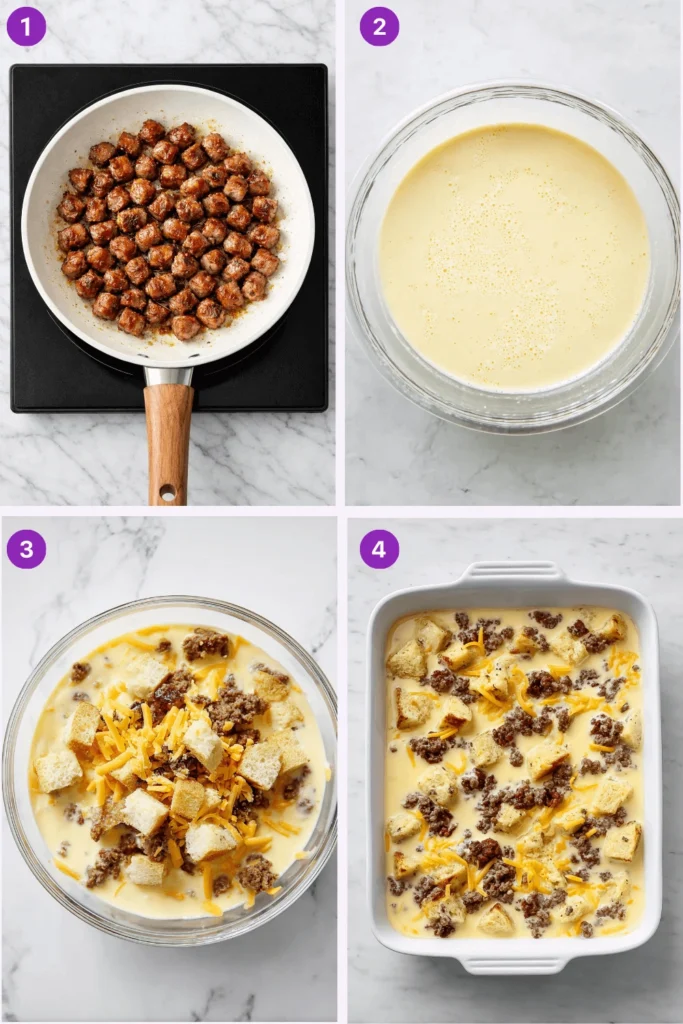
In a skillet over medium heat, cook your chosen sausage until it’s browned and fully crumbled. This usually takes about ten minutes. Use a spatula or spoon to break it into small bits as it cooks. Once done, remove from the heat and drain any excess fat.
Step Two: Prep Your Base
If you’re using bread, cut it into one-inch cubes and spread them evenly in a greased baking dish. If you’re using hash browns, make sure they’re thawed and gently press them into the bottom of the dish to create a firm base.
Step Three: Layer the Ingredients
Sprinkle the cooked sausage evenly over your bread or hash brown base. Follow with a generous layer of shredded cheese. If you’re adding extras like sautéed onions, peppers, or spinach, now’s the time to scatter those in too.
Step Four: Make the Egg Mixture
Crack your eggs into a large mixing bowl. Add milk, cream, and seasonings, then whisk until completely smooth. The mixture should be a pale yellow and slightly frothy on top. This helps create that airy, fluffy texture when baked.
Step Five: Combine and Chill (Optional)
Pour the egg mixture evenly over the sausage and cheese layers. Gently press down with a spatula so everything is coated. If you’re prepping ahead, cover with foil and refrigerate for several hours or overnight. This allows the flavors to meld and gives the bread time to soak in the liquid.
Step Six: Bake It
Preheat your oven to a moderate temperature, usually around 350°F. Bake the casserole uncovered for about forty-five to fifty-five minutes, or until the center is set and the top is golden and slightly puffed. If the edges start to brown too quickly, you can tent it loosely with foil partway through baking.
Step Seven: Cool and Serve
Once baked, let the casserole rest for about ten minutes before slicing. This helps everything firm up a bit so you can cut neat portions. Serve warm and garnish with chopped herbs, hot sauce, or even a dollop of sour cream if you like.
Tips, Variations, and Storage Options
Even though sausage and egg casserole is a breeze to make, there are some helpful tweaks and ideas that can take it from great to exceptional. Whether you’re adjusting for dietary needs, switching up the flavors, or planning ahead, this section gives you all the options to personalize your dish.
Tips for Best Results
- Don’t Overbake
This is a common mistake. Overbaking can lead to rubbery eggs and a dry texture. Keep an eye on it during the final ten minutes of baking. Once the center is firm and a toothpick comes out clean, it’s done. If you like a slightly softer texture, pull it out when the middle is still just a tiny bit jiggly. - Let It Rest Before Slicing
Give your casserole about ten minutes to settle once it’s out of the oven. This helps the layers firm up and makes it easier to slice and serve cleanly. - Use a Glass or Ceramic Dish
These materials distribute heat more evenly than metal pans and help prevent over-browning. A standard nine-by-thirteen-inch dish is perfect for most recipes and feeds up to ten. - Don’t Skip the Seasoning
Eggs and bread can be bland on their own, so seasoning is key. Taste your cooked sausage before mixing and adjust the salt and pepper accordingly. If you’re using pre-seasoned sausage, go lighter on extra spices. - Prep the Night Before
If you’re making this for breakfast or brunch, assemble everything the evening before and keep it covered in the fridge. It’ll be ready to pop into the oven in the morning with no fuss. Just add five to ten extra minutes to the baking time since it’s going in cold.
Variations to Try
- Vegetarian Sausage and Egg Casserole
Use a plant-based sausage or meat substitute and load up on vegetables like mushrooms, peppers, and spinach. A sprinkle of smoked paprika adds that traditional savory depth. - Low-Carb Version
Skip the bread and use sautéed cauliflower rice or roasted vegetables as the base. It keeps the casserole fluffy without the carbs and still feels super satisfying. - Tex-Mex Twist
Add green chiles, black beans, and pepper jack cheese. Swap the regular sausage for spicy chorizo or seasoned beef. Serve with salsa and avocado slices. - Holiday Brunch Special
Include caramelized onions, baby kale, and gruyère cheese. Add a pinch of nutmeg for a subtle warmth that pairs well with holiday spices. - Mini Casseroles for Meal Prep
Instead of baking in one large dish, divide the mixture into muffin tins or small ramekins. These freeze well and make great grab-and-go breakfasts.
Storage and Reheating Tips
- Storing Leftovers
Once cooled, cover the baking dish tightly or transfer portions into airtight containers. Store in the fridge for up to four days. - Freezing
Wrap individual portions or the whole casserole tightly with plastic wrap, then foil. Freeze for up to two months. To reheat, thaw overnight in the fridge and bake until warmed through. - Reheating
Microwave individual servings for about one to two minutes, or reheat in the oven at a low temp (around 300°F) until heated through. Cover with foil to prevent drying out.
Equipment Needed
You don’t need anything fancy to whip up a great sausage and egg casserole, but here are the key kitchen tools that will make the process smoother:
- Mixing Bowls: You’ll need at least two—one for whisking the eggs and another for holding cooked sausage or prepping ingredients.
- Skillet or Frying Pan: A good-quality nonstick or cast iron skillet is ideal for browning sausage and sautéing vegetables.
- Whisk or Fork: For beating the eggs and milk until smooth and well combined.
- Baking Dish: A nine-by-thirteen-inch glass or ceramic baking dish works perfectly for most casseroles. If you’re making a smaller batch, you can use an eight-by-eight.
- Spatula or Wooden Spoon: Helpful for stirring, layering ingredients, and gently pressing the casserole mixture before baking.
Related Recipes
If you’re into the comforting, make-ahead vibe of sausage and egg casserole, here are a few similar dishes worth checking out:
- Cheesy Hash Brown Breakfast Bake: This one skips the bread entirely and uses crispy hash browns as the base. Toss in diced ham, eggs, and lots of cheddar for a brunch win.
- Sausage Egg Muffins: Hearty and portable, these savory egg muffins are loaded with flavorful sausage and melty cheese. Great for grab-and-go breakfasts, they’re easy to prep, freezer-friendly, and reheat in a flash.
- Southwest Breakfast Burrito Bake: Tortilla pieces are layered with sausage, scrambled eggs, beans, and cheese, then baked until bubbly. Great for freezing and reheating.
- Overnight French Toast Casserole: More of a sweet brunch lover? This one features thick slices of bread soaked in a cinnamon-vanilla custard and baked until golden. Serve with syrup or fresh berries.
Pairing/Serving Suggestions
While sausage and egg casserole is a meal in itself, pairing it with the right sides, drinks, and toppings can elevate the experience—whether you’re hosting a brunch or just treating yourself to something special.
Brunch-Worthy Sides
This casserole is rich and savory, so pairing it with lighter, fresher items provides balance. A simple mixed green salad with vinaigrette works beautifully. You can also serve it alongside fresh fruit salad—grapes, strawberries, and pineapple are all bright choices that contrast the richness of the dish.
If you’re going for full-on brunch vibes, try buttermilk biscuits or croissants on the side. Their flaky texture adds another comforting layer without competing for attention.
Toppings and Add-Ons
Sometimes all a good casserole needs is a little something extra on top. Fresh herbs like parsley, chives, or dill bring a pop of color and flavor. A spoonful of sour cream or Greek yogurt adds creaminess, especially if the casserole includes spicy sausage or bold seasonings.
For those who like heat, hot sauce or salsa can take this dish up a notch. Crumbled feta, avocado slices, or even a drizzle of pesto are fun ways to give it a unique twist.
Drink Pairings
For morning meals, pair it with freshly brewed coffee, cold brew, or iced lattes for a refreshing contrast. If you’re going non-caffeinated, a tall glass of orange juice or apple cider (especially in the fall) is always a classic.
Hosting brunch? Pair it with mimosas, bloody marys, or sparkling water with lemon for a more festive feel.
Serving Ideas
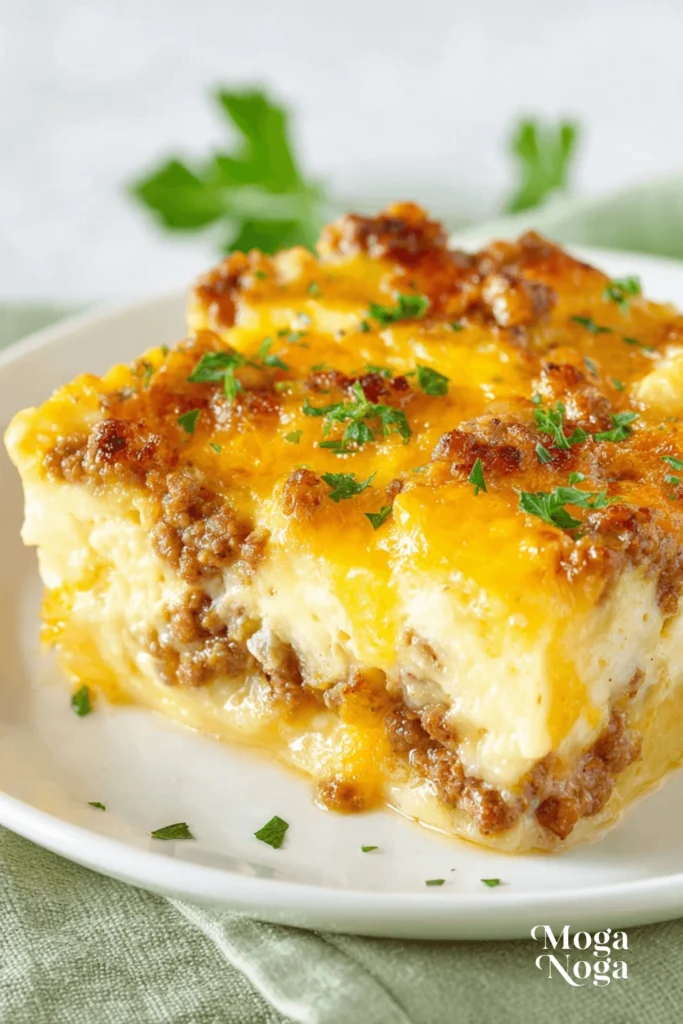
Sausage and egg casserole slices neatly once cooled slightly, which means it also plates beautifully. Serve each slice with a garnish of herbs and a wedge of citrus for a café-style presentation.
If you’re meal-prepping, pack individual slices in containers with a side of roasted veggies or fresh salad for easy, balanced lunches all week long.
Frequently Asked Questions
Can I make sausage and egg casserole ahead of time?
Yes, and it actually turns out better when made ahead. You can assemble it the night before and refrigerate it until you’re ready to bake. Just be sure to cover it tightly and add a few minutes to the bake time since it will be cold when it goes into the oven.
Can I freeze this casserole?
Absolutely. Once baked and cooled, you can slice and freeze individual portions or freeze the whole dish. Wrap it well and store for up to two months. When you’re ready to eat, thaw in the fridge overnight and reheat in the oven or microwave.
What’s the best way to reheat leftovers?
For individual portions, microwave for one to two minutes. For larger portions, use the oven at a low temp (around 300°F) and cover with foil to prevent drying out.
Can I use egg whites instead of whole eggs?
Yes, you can substitute some or all of the eggs with egg whites or liquid egg substitutes. Keep in mind that the texture might be a bit less rich, but it’s a great way to lighten up the dish.
What kind of sausage should I use?
Any breakfast sausage works well, but feel free to experiment. Mild or hot pork sausage is traditional, but turkey sausage, chicken sausage, or even vegetarian sausage crumbles are all great alternatives depending on your dietary needs.
Do I need to use bread in the casserole?
Not necessarily. You can substitute the bread with hash browns or roasted vegetables if you’re avoiding gluten or carbs. The bread helps absorb the egg mixture, but other bases can work just as well.
How do I know when the casserole is done baking?
The edges should be golden, the center should no longer jiggle, and a knife inserted into the middle should come out clean. If it’s browning too quickly, cover loosely with foil.
Nutrition Information
Keep in mind that exact nutritional values will vary depending on your ingredients (especially the sausage and cheese), but here’s a general breakdown for one serving of sausage and egg casserole when using standard ingredients and a nine-by-thirteen-inch dish cut into twelve servings:
- Calories: Approximately two hundred eighty to three hundred per serving.
Hearty enough to keep you full without going overboard. - Protein: About sixteen to eighteen grams per serving.
The sausage, eggs, and cheese deliver a solid protein boost—perfect for a strong start to your day. - Carbohydrates: Around ten to fourteen grams per serving.
This varies based on whether you use bread, hash browns, or go low-carb with veggies. - Fats: Fifteen to twenty grams per serving.
Most of the fat comes from the sausage, eggs, and cheese. For a lighter version, opt for turkey sausage and reduced-fat cheese. - Fiber: One to three grams depending on your add-ins.
Including veggies like spinach, peppers, or mushrooms boosts the fiber count. - Sugar: Very low—usually under two grams unless your sausage includes sweeteners.
- Sodium: This can range quite a bit, from five hundred to seven hundred milligrams per serving, depending on your sausage and cheese. Use low-sodium options to control it better.
Seasonal and Occasion Variations
Sausage and egg casserole isn’t just a breakfast recipe—it’s a year-round, any-occasion kind of dish. With just a few tweaks, you can tailor it for holidays, seasons, and special moments. Whether you’re hosting brunch on a sunny spring morning or planning a cozy Christmas breakfast, there’s always a reason to serve it.
- Spring Brunch Delight: In spring, go light and fresh. Add seasonal veggies like asparagus, leeks, or fresh peas. Use goat cheese or feta for a tangy lift. Serve with a citrusy salad and iced tea to create a cheerful brunch that feels seasonal and bright.
- Summer Garden Casserole: Summer calls for color and freshness. Toss in cherry tomatoes, zucchini, bell peppers, and fresh basil. Consider using Italian sausage for a bit of Mediterranean flair. This version pairs wonderfully with chilled watermelon, iced coffee, or lemonade on a patio table.
- Fall Harvest Twist: During autumn, embrace deeper flavors. Add roasted butternut squash, caramelized onions, or apple chicken sausage. Mix in sharp cheddar and a touch of nutmeg. It’s the perfect dish to enjoy with warm apple cider on a cool morning.
- Holiday Morning Favorite: For holidays like Christmas, Easter, or Thanksgiving morning, sausage and egg casserole becomes even more magical. Use sage sausage, a mix of cheddar and Swiss, and toss in cubed ham or even a little cranberry for festive flair. Make it the night before and bake it while you’re opening gifts or setting the table.
- Game Day Fuel: Need a crowd-pleaser for watching the big game? Make a Tex-Mex style version with spicy sausage, black beans, jalapeños, and Monterey jack. Serve with tortilla chips, guacamole, and cold drinks. It’s hearty, fun, and gone fast.
- Bridal or Baby Showers: For more elegant occasions, go light with spinach, mushrooms, chives, and a soft cheese like brie. Bake it in a round dish for a quiche-like presentation. Serve with mimosas or lavender lemonade for an extra charming touch.
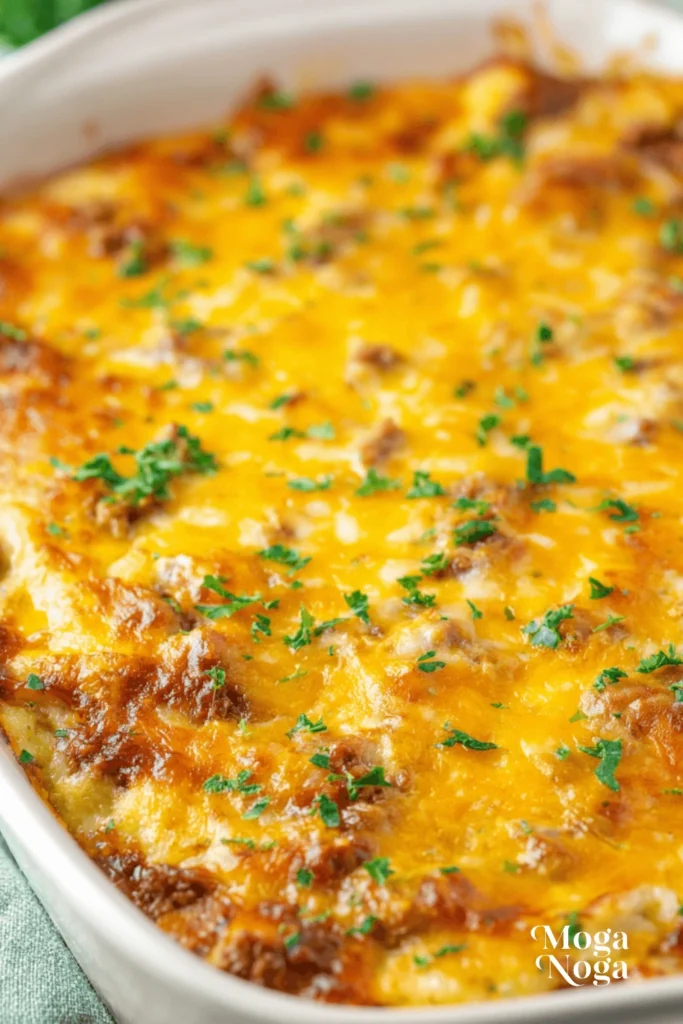
My Recipe Tips
Here are a few of my go-to tricks and tips I’ve learned from making sausage and egg casserole over the years. These simple adjustments can make a big difference in both taste and texture.
- Use Day-Old Bread for Better Texture: If you’re using bread, let it dry out a bit first. This helps it soak up the egg mixture without turning to mush. Toasting it for a few minutes works if it’s too fresh.
- Grate Cheese Fresh When You Can: Pre-shredded cheese works fine in a pinch, but freshly grated cheese melts better and tastes richer. It also avoids that powdery coating that sometimes affects texture.
- Customize the Layers: If you’re adding veggies, sauté them first to release excess moisture and enhance their flavor. Raw veggies can water down the casserole and alter the bake time.
- Add a Little Crunch: For texture contrast, sprinkle panko breadcrumbs or crushed crackers mixed with a touch of butter over the top before baking. It forms a golden crust that’s irresistible.
- Let It Sit Before Baking (Optional But Amazing): Letting the casserole sit for at least thirty minutes (or overnight) after assembly allows all the flavors to soak into the bread or hash browns. The eggs set up beautifully, and the texture becomes creamier.
- Always Check the Center: Even if the edges are golden, don’t trust them alone. Use a toothpick, knife, or thermometer (look for 160°F) to make sure the center is fully cooked through.
- Try It With Leftovers: Got leftover sausage or roasted veggies in the fridge? Toss them in! This casserole is super forgiving and loves a fridge clean-out moment.
Conclusion
Sausage and egg casserole is one of those rare recipes that hits every mark: easy, satisfying, customizable, and crowd-friendly. It’s the kind of dish that brings people together—whether it’s early morning breakfast, late-night comfort food, or a centerpiece at your holiday brunch.
With just a handful of ingredients and a little prep, you get a meal that’s rich, filling, and absolutely full of flavor. Whether you’re going classic or adding your own twist, this casserole adapts to your kitchen and your cravings. You can make it for meal prep, freeze it for busy mornings, or bake it fresh to share with friends and family.
So the next time you’re looking for something that’s easy to love, quick to put together, and guaranteed to please—remember the humble sausage and egg casserole. It’s simple, it’s comforting, and it’s always a good idea.
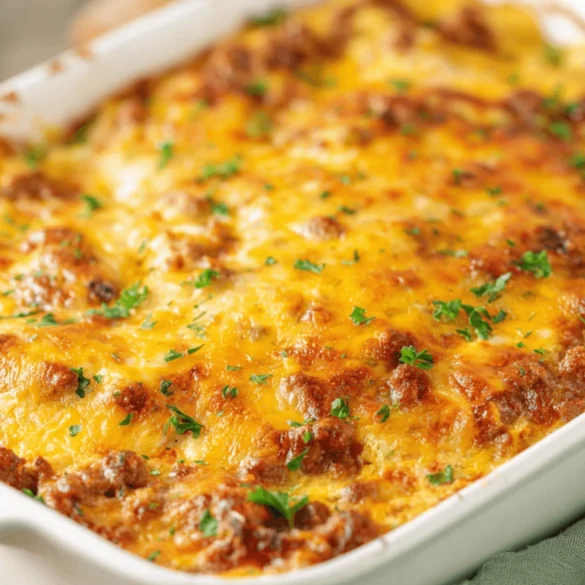
Ingredients
1 lb beef breakfast sausage
8 large eggs
1 cup whole milk
½ teaspoon salt
½ teaspoon black pepper
½ teaspoon garlic powder
½ teaspoon onion powder
1 cup shredded cheddar cheese
1 cup shredded mozzarella or Monterey Jack cheese
1 cup frozen hash browns, thawed
2 tablespoons chopped green onions (optional)
Cooking spray or butter, for greasing
Instructions
Preheat your oven to 375°F (190°C). Grease a 9×13-inch baking dish.
In a skillet over medium heat, cook the beef sausage until fully browned. Drain excess fat and set aside.
Spread the hash browns evenly in the prepared baking dish.
Layer the cooked sausage over the hash browns, then sprinkle with shredded cheeses.
In a large bowl, whisk together eggs, milk, salt, black pepper, garlic powder, and onion powder until well combined.
Pour the egg mixture evenly over the sausage and cheese layers.
Gently press down to ensure everything is evenly coated.
Bake uncovered for 35–40 minutes, or until the center is set and the top is lightly golden.
Remove from the oven and let rest for 5 minutes. Garnish with green onions if desired, then slice and serve.
